We are glad to announce that the seventh edition of the online course LC-MS Method Validation is open for registration (registration link is here)! The course will be offered as a Massive Open On-line Course (MOOC) during Dec 15, 2026 – Feb 26, 2027.
This is a practice-oriented on-line course on validation of analytical methods, specifically using liquid chromatography-mass spectrometry (LC-MS) as technique, mostly (but not limited to) using the electrospray (ESI) ion source. The course will also be of interest to chromatography practitioners using other detector types. The course introduces the main concepts and mathematical apparatus of validation, covers the most important method performance parameters and ways of estimating them. More information about the course can be found in Course introduction page.
Participation in the course is free of charge. Receiving digital certificate (in the case of successful completion) is also free of charge. Printed certificate (to be sent by post) is available for a fee of 62 EUR. Registration is possible until the start of the course. The course material is available from the above address all the time and can be used via web by anyone who wishes to improve the knowledge and skills in analytical method validation (especially when using LC-ESI-MS).
You are welcome to distribute this message to potentially interested people!
On the 9th of June 2026, Shrikant Shivaji Pawade successfully defended his dissertation Metrological aspects of sampling and water/moisture determination on the example of lignin. As the thesis encompassed a wide range of topics – from lignin chemistry to NMR and from uncertainty estimation to water and moisture content measurement with ATR-FTIR – there were two opponents invited to examine the PhD candidate: Dr. Stephanie Bell (NPL, UK) and Prof. Riina Aav (TalTech, Estonia).
Development of a rapid and non-destructive method for water and moisture content in lignin using ATR-FTIR with PLS calibration
The defence was intensive and entertaining and eventually Shrikant managed to convince the opponents, the defence committee and the listeners that he was on top of the topics that his dissertation embraces. Please accept our warm congratulations, Shrikant!
Modelling of temperature-dependent water release to identify suitable evaporation temperatures for oven cKF titration
The method requires a small amount of sample amount and minimal sample preparation. For developing the method, Shrikant prepared a range of calibration and validation samples from lignins of four different origins (two different types of Kraft lignins, Lignova lignin and dealkaline lignin). Water content was determined using vapour-phase coulometric Karl Fischer titration (i.e. oven-cKF titration), supported by modelling of temperature-dependent water release to identify suitable evaporation temperatures. Moisture content was determined gravimetrically using oven drying (at 105 °C, 7 h or 48 h) and lyophilisation (freeze-drying).
Water and moisture content is an important quality characteristic of not only lignin but essentially any natural feedstock. So, it is expected that the results of Shrikant’s thesis will find use in applied bioproducts research, as well as in industrial biorefineries.
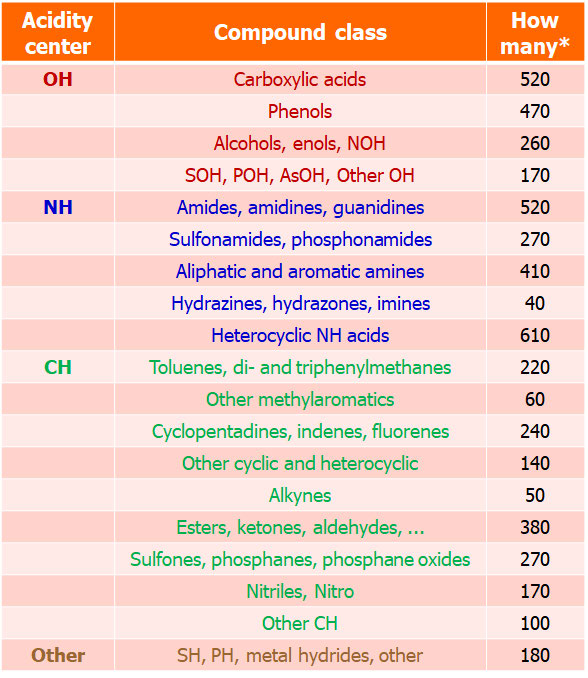
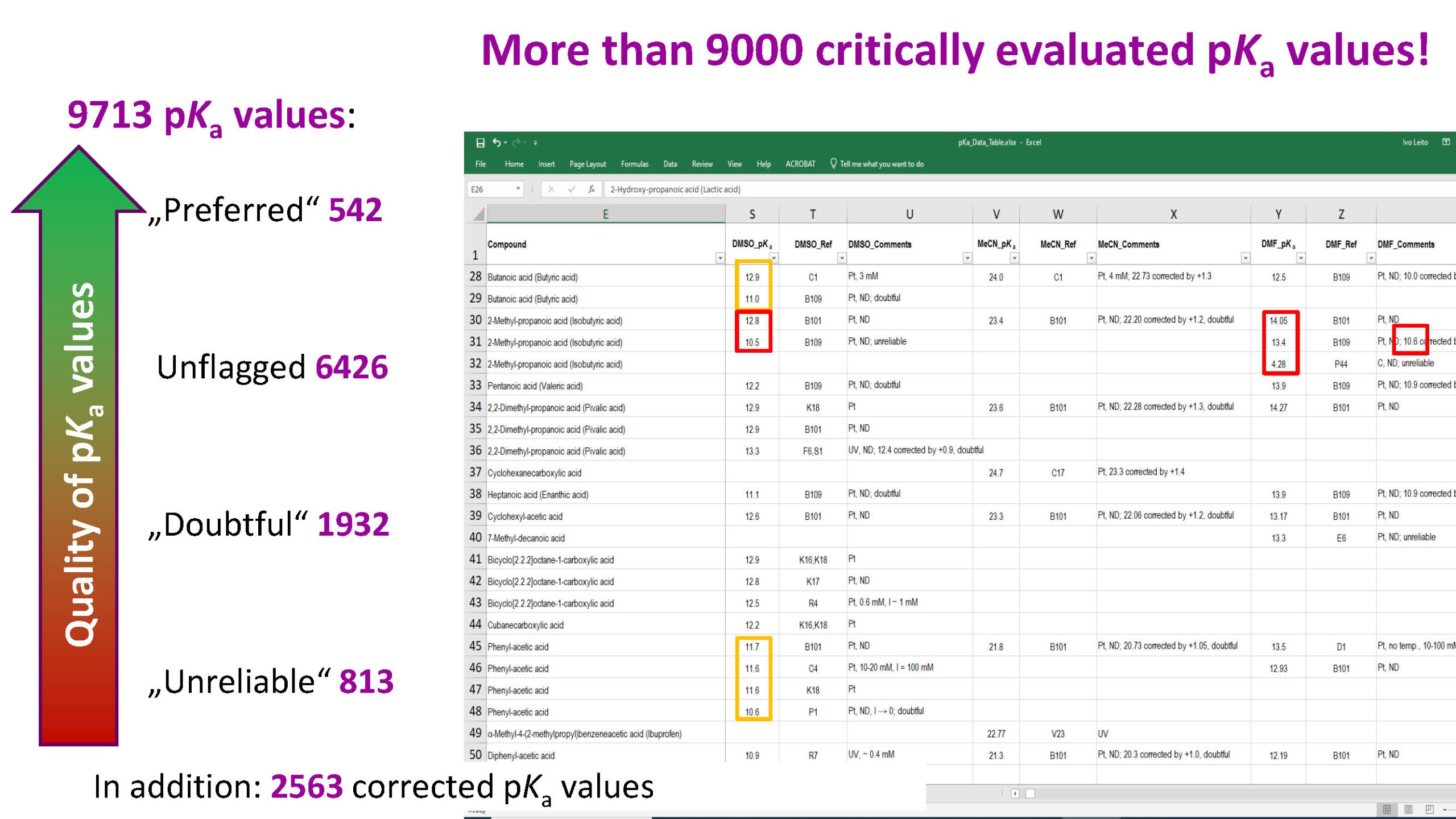
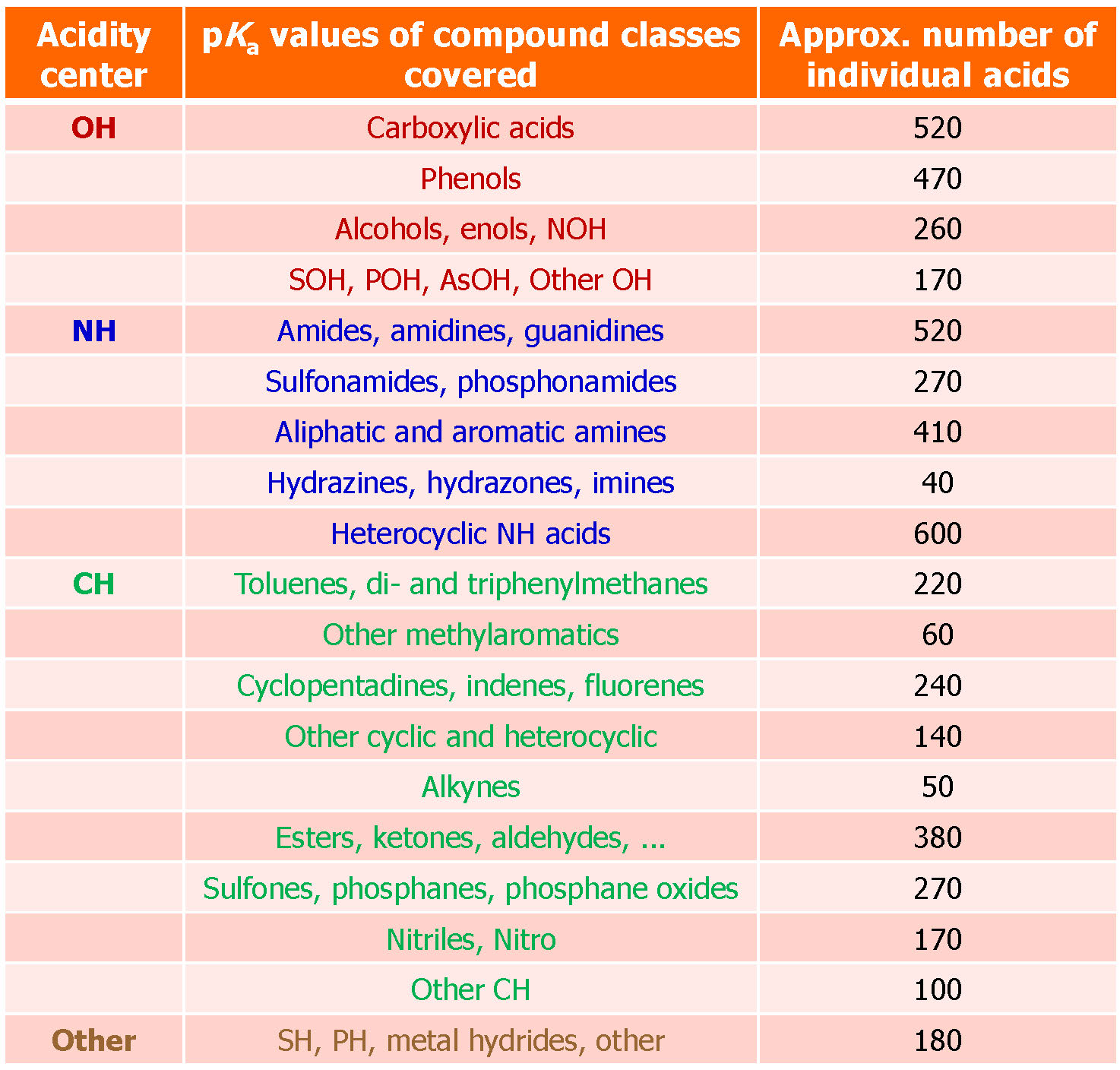
14.04.2026: The Zenodo data collection (Image on the right)) recently published as IUPAC technical report Acid dissociation constants in selected dipolar non-hydrogen-bond-donor solvents. Pure and Applied Chemistry. 2025, 97, 973,https://doi.org/10.1515/pac-2024-0276 has been updated for the first time by new pKa values so that its version 1.5.0 now contains more than 9700 quality-evaluated pKa values of more than 5000 acids in 7 dipolar aprotic solvents (DMSO, MeCN, DMF, pyridine, acetone, propylene carbonate and THF). The values have been collected from around 800 original works. The widest possible selection of compound classes is covered (Table below). The results of this large-scale pKa data collection and evaluation work are now available for the scientific community to use in reaction mechanism analysis and modelling, catalyst design, computational method development, etc.
Very importantly, the collected pKa data have been critically evaluated based on predefined quality criteria and depending on situation, kept as they were originally published, flagged as doubtful/unreliable (around 2700 values) or corrected (around 2500 values).
To enable automated processing and data mining, as well as other kinds of cheminformatics, the data are presented as a set of spreadsheets, together with structural codes (SMILES and InChI strings), compound class qualifiers and comments.
The published IUPAC Technical Report contains also comprehensive educational background information on the acid-base processes in non-aqueous media, as well as brief descriptions of the main measurement methods, with focus on the reliability of the data and sources of uncertainty.
The work has been carried out in the framework of the IUPAC project 2015-020-2-500. It was additionally funded by numerous sources, most importantly the EMPIR programme (project 17FUN09 “UnipHied”, www.uniphied.eu), by the Estonian Research Council grants (PRG690, PRG2557) and by the Estonian Ministry of Education and Research (TK210).
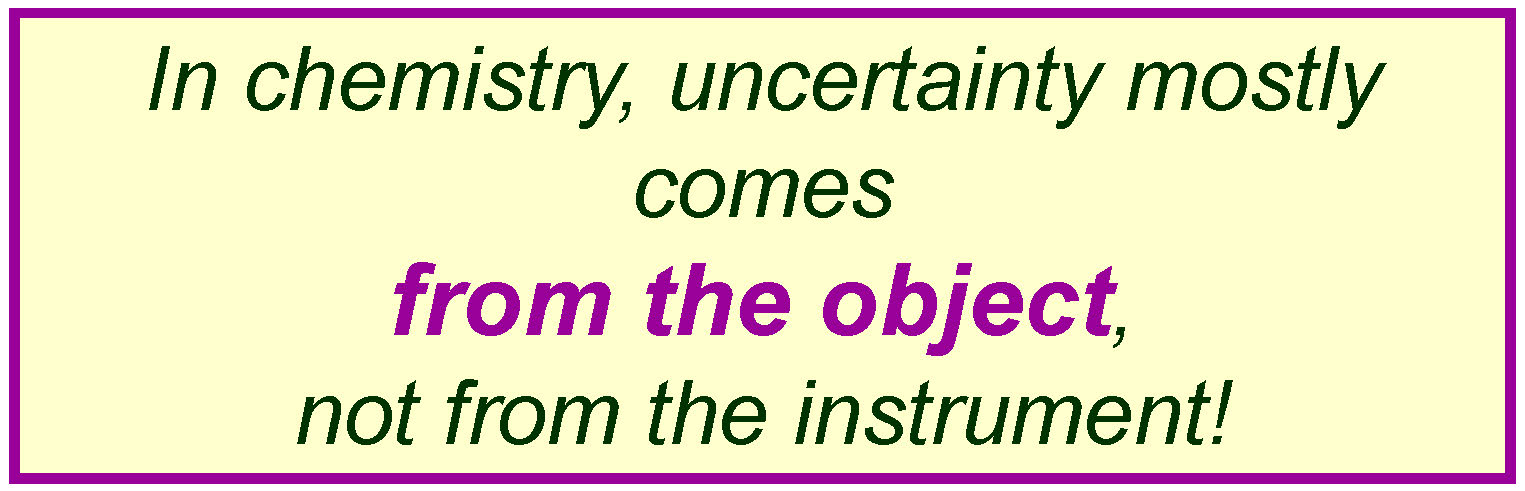
The presentation outlined three important misconceptions in estimation of measurement uncertainty in chemical measurements: (1) Uncertainty is primarily determined by the accuracy of the instrument; (2) Uncertainty is quantitatively expressed by (dis)agreement between results of repeated measurements and (3) „Simple“ measurements are simple.
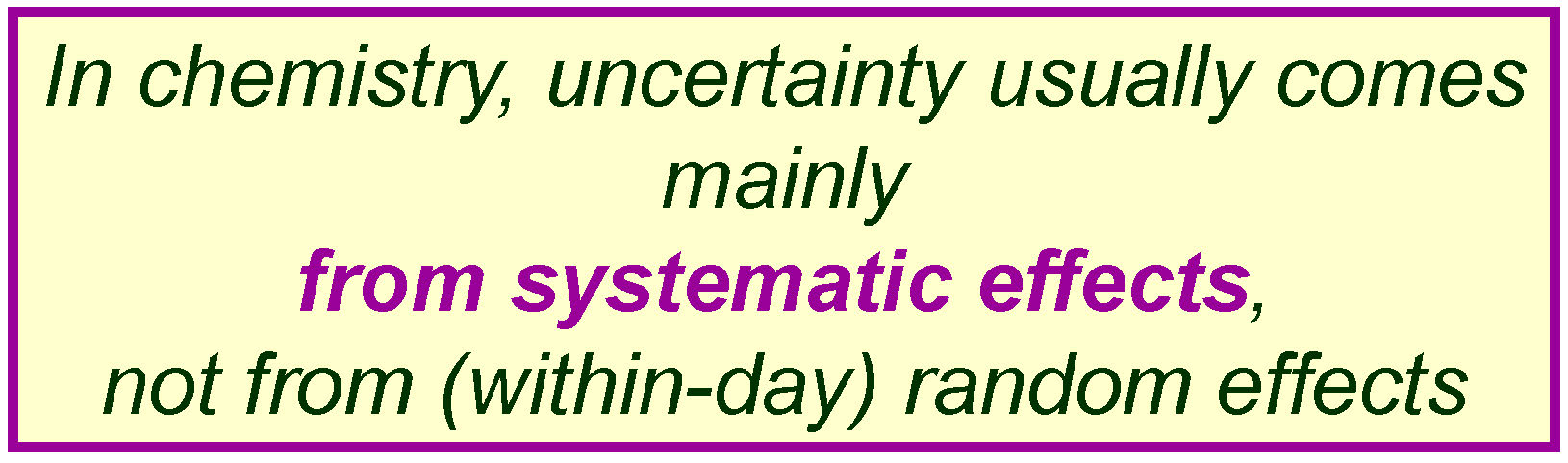
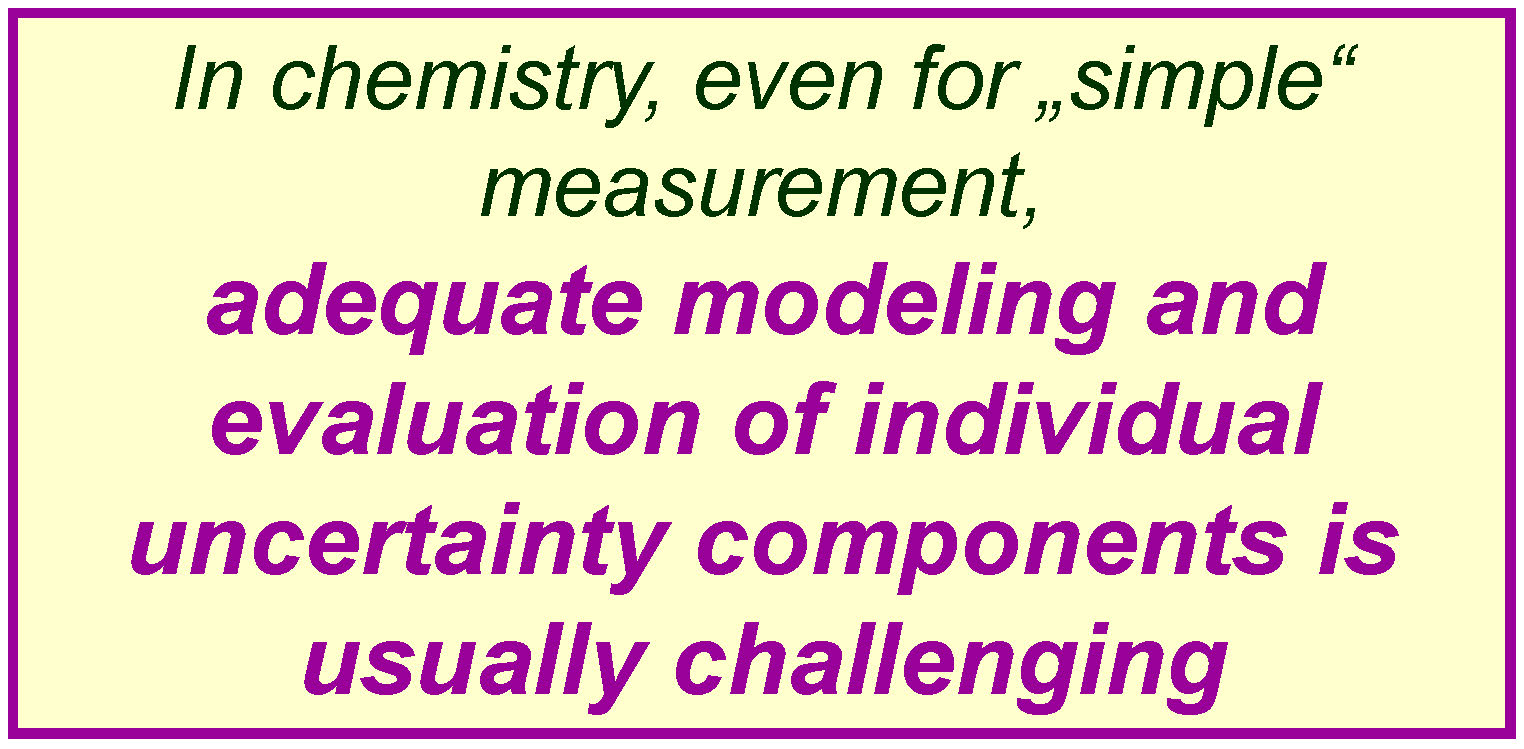
All three misconceptions were debunked during the talk on the basis of the research of our group from the recent years: (1) In chemistry, uncertainty mostly comes from the object, not from the instrument; (2) In chemistry, uncertainty usually comes mainly from systematic effects, not from (within-day) random effects and (3) In chemistry, even for „simple“ measurement, adequate modeling and evaluation of individual uncertainty components is usually challenging.
The presentation was warmly received by the participants, receiving a number of quations and coffee break discussions!
(This research presented in the talk has been supported by the IUPAC project 2015-020-2-500, MetPart 23RPT03 GrainMet, Estonian Ministry of Education and Research (TK210), Estonian Research Council grants IUT20-14, PRG690 and PRG1557, Estonian Center of Analytical Chemistry, www.akki.ee)
The tenth (!) edition of the online course LC-MS Method Validation is open for registration (registration link is here)! The course will be offered as a Massive Open On-line Course (MOOC) during December 16, 2025 – February 27, 2026.
This is a practice-oriented on-line course on validation of analytical methods, specifically using liquid chromatography-mass spectrometry (LC-MS) as technique, mostly (but not limited to) using the electrospray (ESI) ion source. The scope of the course is sufficiently broad, so that it will be useful also to chromatography practitioners using other detector types. The course introduces the main concepts and mathematical apparatus of validation, covers the most important method performance parameters and ways of estimating them. More information about the course can be found in the Course introduction page.
Participation in the course is free of charge. Receiving digital certificate (in the case of successful completion) is also free of charge. Printed certificate (to be sent by post) is available for a fee of 61 EUR. Registration is possible until the start of the course. The course materials are available from the above address all the time and can be used via web by anyone who wishes to improve the knowledge and skills in analytical method validation (especially when using LC-ESI-MS).
19.08.2025: More than 9000 quality-evaluated pKa values of more than 5000 acids in 7 dipolar aprotic solvents (DMSO, MeCN, DMF, pyridine, acetone, propylene carbonate and THF) have been collected from around 800 original works and are now available as an IUPAC technical report Acid dissociation constants in selected dipolar non-hydrogen-bond-donor solvents. Pure and Applied Chemistry. 2025,https://doi.org/10.1515/pac-2024-0276. The widest possible selection of compound classes is covered (Table below). The results of this large-scale pKa data collection and evaluation work are now available for the scientific community to use in reaction mechanism analysis and modelling, catalyst design, computational method development, etc.
Very importantly, the collected pKa data have been critically evaluated based on predefined quality criteria and depending on situation, kept as they were originally published, flagged as doubtful/unreliable (around 2700 values) or corrected (around 2500 values) (Figure above).
To enable automated processing and data mining, as well as other kinds of cheminformatics, the data are presented as a set of spreadsheets, together with structural codes (SMILES and InChI strings), compound class qualifiers and comments.
The published IUPAC Technical Report contains also comprehensive educational background information on the acid-base processes in non-aqueous media, as well as brief descriptions of the main measurement methods, with focus on the reliability of the data and sources of uncertainty.
The work has been carried out in the framework of the IUPAC project 2015-020-2-500. It was additionally funded by numerous sources, most importantly the EMPIR programme (project 17FUN09 “UnipHied”, www.uniphied.eu), by the Estonian Research Council grant (PRG690) and by the Estonian Ministry of Education and Research (TK210).
In a recent publication Universal Reversible Hydrogen Potential for Electrocatalytic Ammonia Splitting Reactions in Nonaqueous Solvents from Unified pH Measurements. Inorg. Chem.2025, https://doi.org/10.1021/acs.inorgchem.5c02177, jointly with colleagues from Michigan State University, we have used careful pHabs measurements of dilute NH4+/NH3 buffer solutions in four nonaqueous solvents – acetonitrile (MeCN), Tetrahydrofuran (THF), dimethylformamide (DMF), and propylene carbonate (PC) – to determine the pHabsH2O values aligned to the aqueous pH scale (see the resulting pHabs “ladder” in the graph below). From those measurements (combined with some other experiments) it was possible to determine the reversible hydrogen potential E°H+/H2 in these four solvents relative to the aqueous standard hydrogen electrode (SHE) and, most importantly, ensuring comparability across the different solvents. As an independent method, Open Circuit Potential measurements were carried out in the same solvents titrated with NH4+/NH3 to obtain alternative values for the reversible hydrogen potential in these solvents. The results of the two methods agreed well.
The reversible hydrogen potential values were then used to obtain, for the first time, the overpotential for ammonia oxidation as a function of solvent, with a recently discovered ruthenium catalyst. I.e., it is now for the first time possible to rigorously compare the oxidation process of NH3 to N2 between different solvents!
This work is a clear demonstration of the usefulness of the unified pH (pHabs) concept in understanding and modelling electrocatalysis processes!
Many thanks,Jaan for performing the extremely difficult pHabs measurements, Agnes for leading this pHabs/electrocatalysis topic in our group and Michigan colleagues for the great collaboration!
For the first time, potentiometric pH measurement traceable to the conventional aqueous pH scale has been successfully demonstrated in a low-polarity solvent, 1,2-dichloroethane (1,2-DCE)!
Paulo and Jaan from our group achieved this remarkable result, which has now been published: “Experimental Unified pH Scale in 1,2-Dichloroethane” (Phys. Chem. Chem. Phys., 2025, 27, 3810–3816).
The measurement approach is rooted in the unified pH scale (pHabs scale) concept and is based on pairwise differential potentiometric comparisons of solutions yielding their pHabs differences (ΔpHabs values). 85 such pair-wise measurement comparisons were carried out between solutions prepared in 1,2-DCE, some solutions in mixed solvents and aqueous standard pH buffer solutions. The resulting pHabs “ladder” is pictured in Figure 1.
Figure 1. pHabs scale of solutions in 1,2-DCE, linked to the standard aqueous buffer solutions and comparison against reported pHabs values in the literature.
Applying a least squares minimization approach to the ΔpHabs values and taking into account the reference values of the aqueous standard buffers allowed us to assign pHabs values to 19 equimolar buffer solutions in 1,2-DCE, yielding a pHabs range of −2.9 to 11.0. The consistency standard deviation of 0.17 pH units—higher than similar measurements in polar solvents—reflects the experimental challenges of working in low-polarity media.
Multiple salt bridge configurations (shown in Figure 2) were tested to improve measurement stability. Out of the four tested configurations, a separate salt bridge configuration (SB4) with PEEK capillary tubes yielded the most stable and reliable results, extending measurements for up to five hours without significant drift.
Figure 2. Different salt bridge setup configurations used in the work.
Direct pH measurement of 1,2-DCE solutions against standard aqueous pH buffers is challenging because of the very different nature of the solvents and possible water contamination of 1,2-DCE can significantly affect the measurements. Therefore, bridging solutions (a 60:40 acetonitrile/pH 4 formate solution and buffered ethanol) were employed to facilitate measurements against standard aqueous pH buffers. This approach allows the pHabs values in 1,2-DCE to be directly comparable to the aqueous pH values.
The obtained results confirm that potentiometric pHabs measurements are possible in low-polarity solvents, paving the way for experimentally linking many low-polarity solvents into a unified pH scale. Employing pHabs to compare solution acidity across different media will improve our understanding of how pH impacts processes in catalysis, liquid chromatography, sustainable energy, and the interpretation of acid-base processes in various solvents.
(This research was supported by grant PRG690 from the Estonian Research Council)
The ninth edition of the online course LC-MS Method Validation is open for registration (registration link is here)! The course will be offered as a Massive Open On-line Course (MOOC) during November 26, 2024 – February 7, 2025.
This is a practice-oriented on-line course on validation of analytical methods, specifically using liquid chromatography-mass spectrometry (LC-MS) as technique, mostly (but not limited to) using the electrospray (ESI) ion source. The scope of the course is sufficiently broad, so that it will be useful also to chromatography practitioners using other detector types. The course introduces the main concepts and mathematical apparatus of validation, covers the most important method performance parameters and ways of estimating them. More information about the course can be found in Course introduction page.
Participation in the course is free of charge. Receiving digital certificate (in the case of successful completion) is also free of charge. Printed certificate (to be sent by post) is available for a fee of 60 EUR. Registration is possible until the start of the course. The course materials are available from the above address all the time and can be used via web by anyone who wishes to improve the knowledge and skills in analytical method validation (especially when using LC-ESI-MS).
Märt Lõkov works in our group focusing on investigations of acid-base equilibria – first of all, determination of acidity and basicity constants (pKa values) of molecules – in nonaqueous solutions. This is a core research direction in our group and he is one of the key people in advancing it.
He has made significant contributions to the self-consistent acidity scaleand self-consistent basicity scalein acetonitrile, containing pKa values 231 acids and pKaH values of 279 bases, respectively. Because of how these values have measured (“multiple overlapping” relative spectrophotometric measurements), these scales are widely regarded as the most reliable sets of pKa values in acetonitrile. Thus, assembling those scales was to a large extent also a revision of existing pKa values for many compounds and assigning new values to them.
Märt has mastered the art of pKa measurements in nonaqueous media to the highest degree and is right now one of the most skilful people on planet Earth in performing nonaqueous pKa measurements. Besides doing these measurements himself, he has supervised and is supervising numerous master’s and doctoral students who measure pKa values in their degree projects. Thus, indirectly, via the supervised students, his contribution is even larger.
Perhaps the most ambitious endeavour that Märt is now engaged in is a large-scale re-evaluation and revision of pKa values of carboxylic acids in three nonaqueous solvents – acetonitrile, DMSO, dimethylformamide. The analysis of available pKa data that we have carried out in the framework of the IUPAC project 2015-020-2-500 Critical compilation of acid pKa values in polar aprotic solventsreveals that the non-aqueous pKa values available in the literature for this very important compound class are often significantly in error, sometimes by several orders of magnitude. The revision will involve measurements and analysis of literature data. Märt has assembled a group of people involving several students and the expected outcome will be a large amount of high-quality nonaqueous pKa data of carboxylic acids.


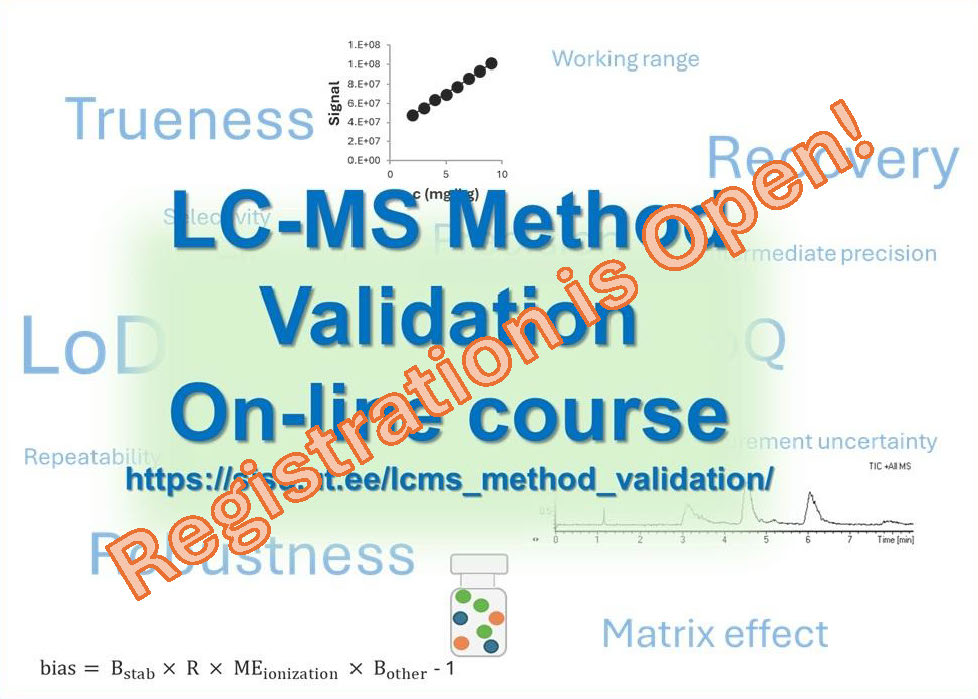 We are glad to announce that the seventh edition of the online course LC-MS Method Validation is open for registration (registration link is here)! The course will be offered as a Massive Open On-line Course (MOOC) during Dec 15, 2026 – Feb 26, 2027.