Visting lecturers – Dr Burcu Binici and Dr Alons Lends

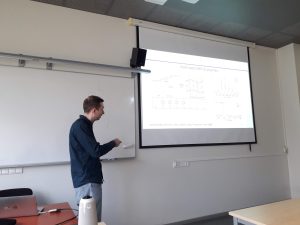
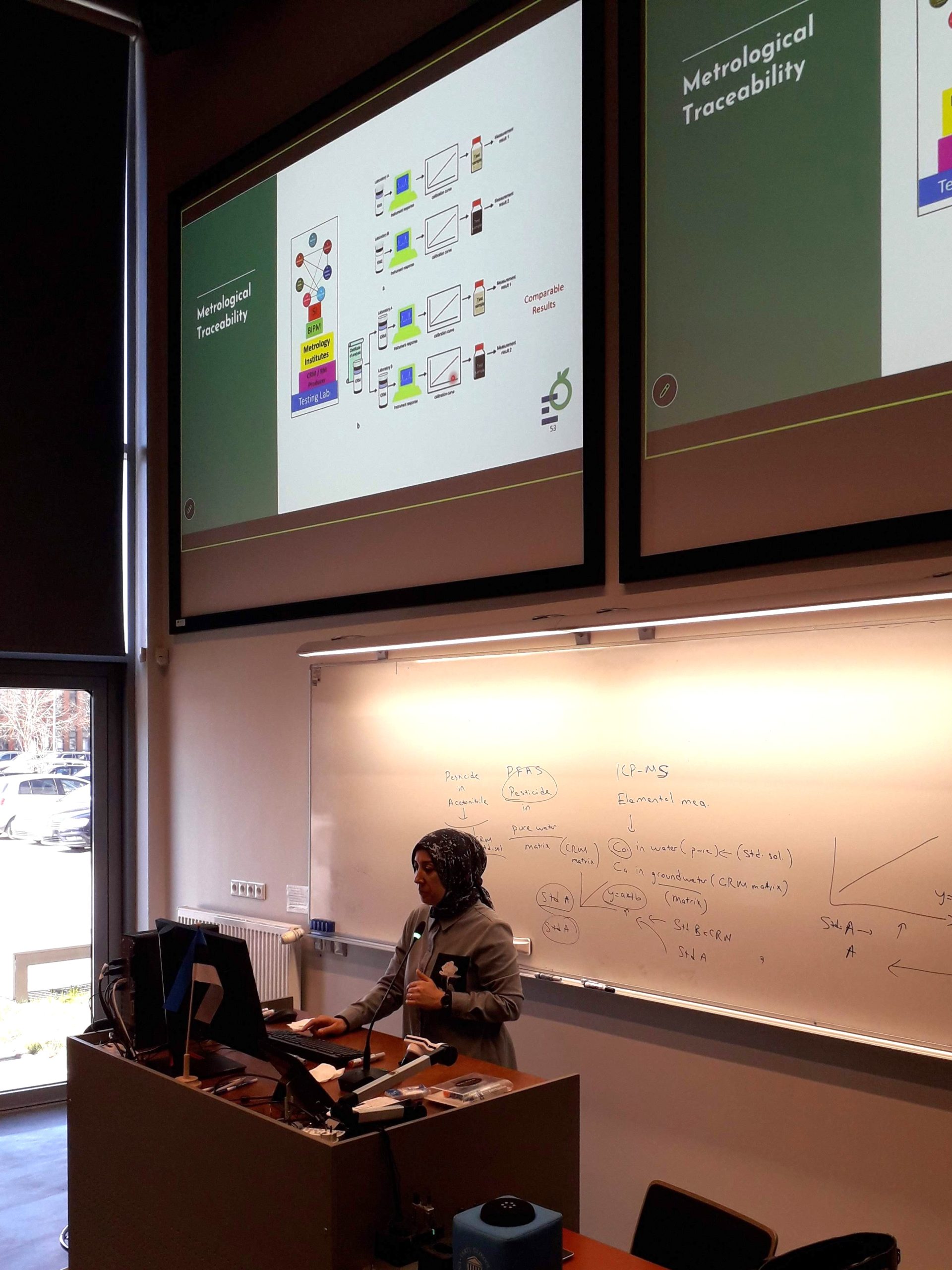
Dr Burcu Binici giving a lecture on metrology

In April, our group hosted two experts who gave lectures on their topics.

First, on April 14-15, Dr Burcu Binici, a specialist at TUBITAK UME (the National Metrology Institute of Türkiye), presented materials on CRMs in the chemistry field to students in the Metrology in Chemistry course. The listeners had the opportunity to broaden their understanding of CRM, RM production, and the requirements for that.

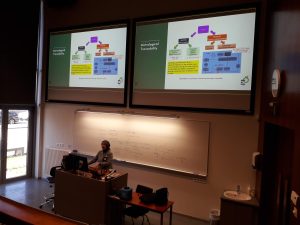
Then, on the weekend of April 17–18, Dr Alons Lends led an intensive NMR course. He is currently working at the Latvian Institute of Organic Synthesis and has extensive experience in various NMR applications. During his course, students and the members of the Analytical Chemistry group learned more about NMR in biomolecular studies and materials science.
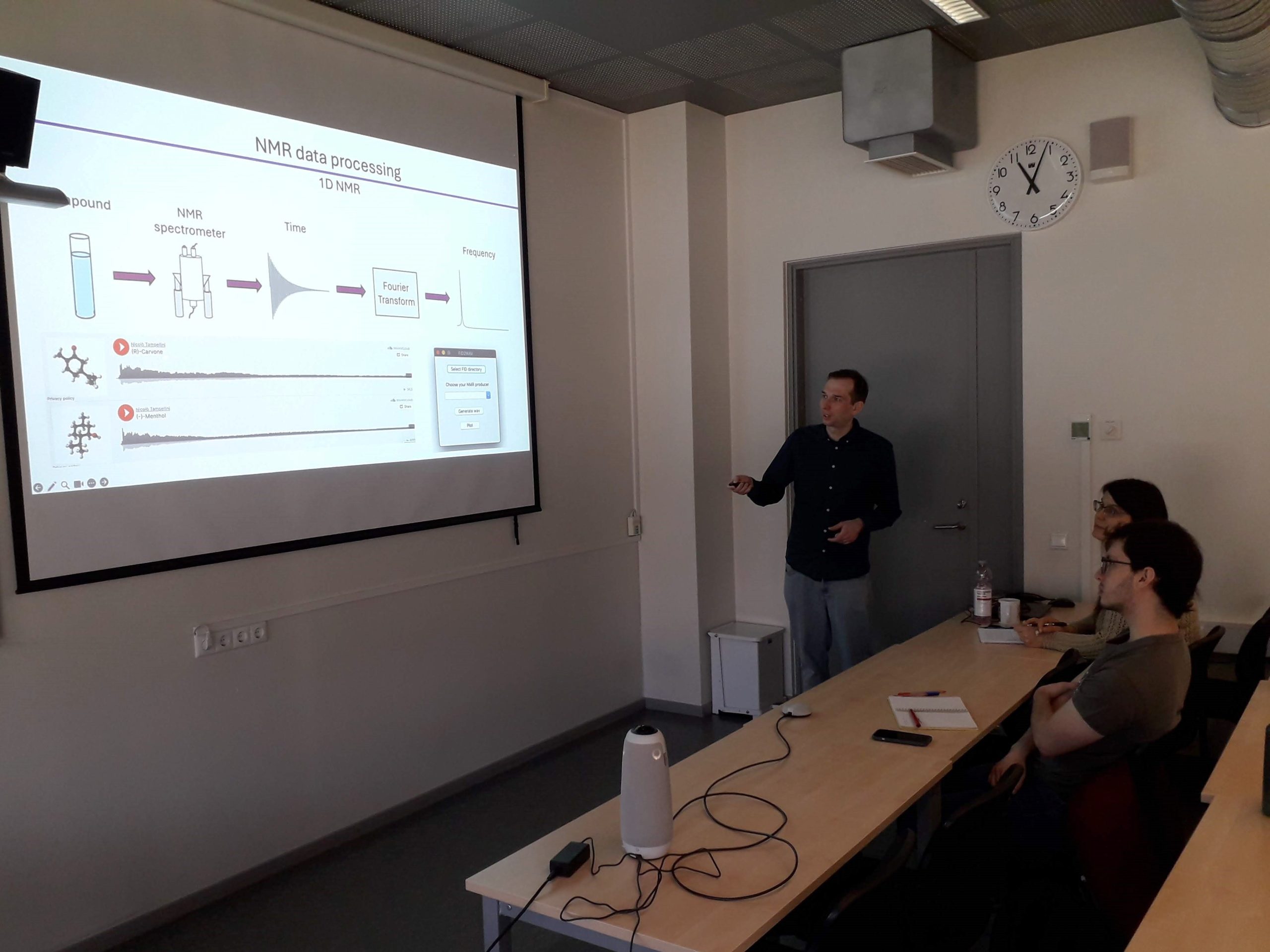
 

Dr Alons Lends giving a lecture on NMR

Ahmed, a student of the EACH (Excellence in Analytical CHemistry) Master’s program, said about the lectures: “This is what makes EACH special: learning directly from experts. One of the best things about the EACH program is that it brings experts to teach specific parts of your curriculum or to give you a deep dive into fields you already know. That’s what makes you feel very comfortable, as you can get very good answers to your questions from experts.”
Measurement Uncertainty online course: 797 participants from 96 countries!

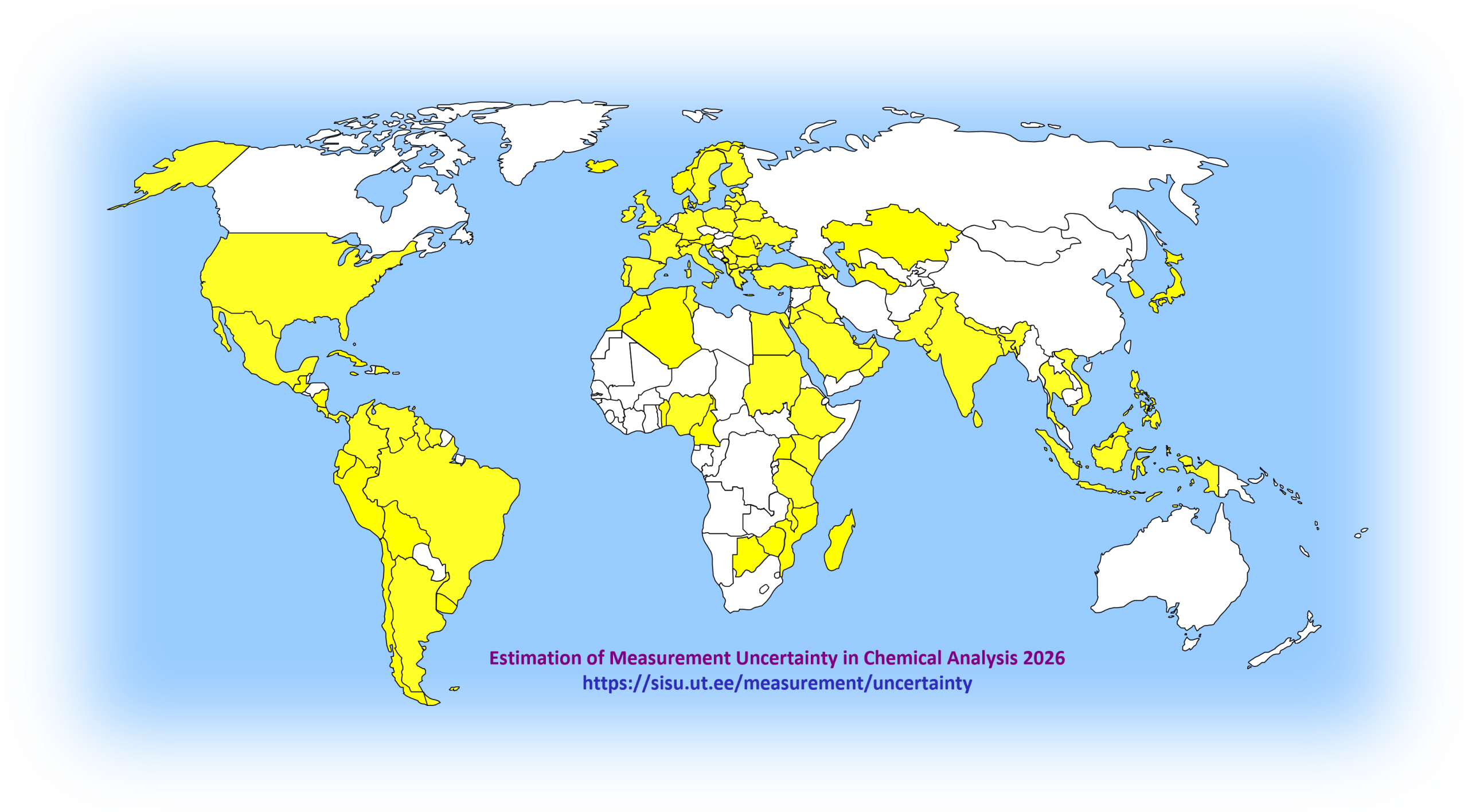
On Tuesday, March 24, 2025 the web course Estimation of Measurement Uncertainty in Chemical Analysis was launched the twelfth time as a MOOC (Massive Online Open Course)!Altogether 797 participants from 96 countries are registered! In the map presented above, the yellow color marks the countries from where participants come. True, the map is coarse and some countries are small. Therefore, not all countries are visible. We are very happy that we have 4 participants also from Ukraine this year. Slava Ukraini!
Registration for this run is closed. But good news: if you did not manage to register this time, you are welcome to register for the 2027 edition of the course.

The full course material is accessible from the web page https://sisu.ut.ee/measurement/uncertainty. The course materials include videos, schemes, calculation files and numerous self-tests (among them also full-fledged measurement uncertainty calculation exercises). In order to pass the course, the registered participants have to pass six graded tests and get higher than 50% score from each of them. These tests are available to registered participants via the Moodle e-learning platform.

This course is run under the umbrella of the Estonian Center of Analytical chemistry (https://www.akki.ee/) and forms a part of the Excellence in Analytical Chemistry (https://www.analyticalchemistry.eu/) Erasmus Mundus master’s programme.

LC-MS Validation online course 10th run has finished!

On March 6, 2026 the on-line course (MOOC) LC-MS Method Validation offered by University of Tartu finished successfully.

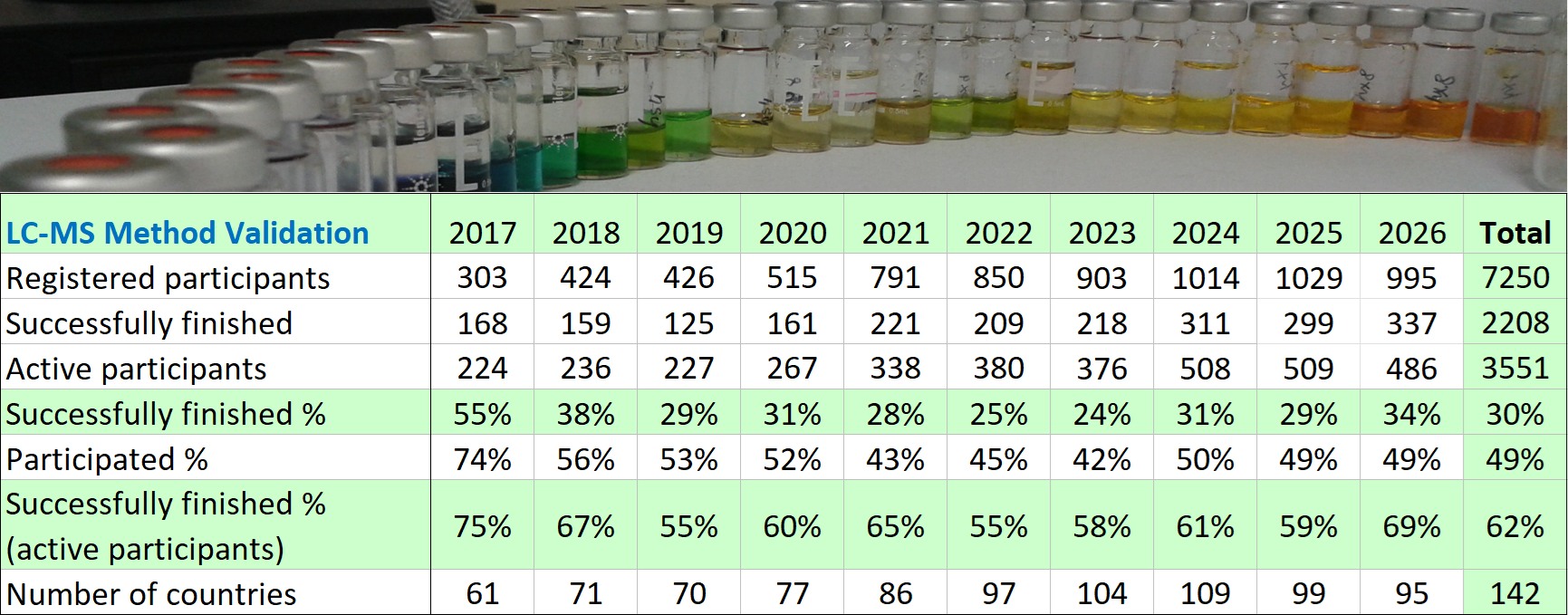
Eventually, altogether 995 people registered from 95 countries. Roughly half of them, 486 participants, actually started the course (i.e. tried at least one graded test at least once), and out of them, 337 successfully completed the course. The overall completion rate was 34%. The completion rate of participants who started the studies was 69%. The completion rates of active participants (i.e. who started the course) seem to have stabilised at around 60% and have increased during the current run. In any case, there is some food for thought for us on how we could improve the participation rate…

At the same time, those participants who actually took part in the course were very active and asked lots of questions. The questions were often very much to the point and addressed things that are really important to analysts in their everyday work. The course has several forums (general and by topic). During the course period, the overall number of forum posts was around 200 (overall number of posts, both from participants and from teachers), and the forums are still active, and posts are still coming in.

This active participation made teaching this MOOC a great experience also for us, the teachers. The discussion threads gave a lot of added value to the course.

We want to thank all participants for helping to make this course a success!

We plan to repeat this course again in Autumn 2026.

Measurement Uncertainty MOOC: Registration is now open!

The 2026 edition of the web course (MOOC) Estimation of Measurement Uncertainty in Chemical Analysis will run from March 24 to May 6, 2026. Registration is now open!

The full course material (as well as the registration link) is accessible from the web page. The course materials include videos, schemes, calculation files, and numerous self-tests (among them also full-fledged measurement uncertainty calculation exercises) and examples. Almost all areas of analytical chemistry are addressed, ranging from simple volumetric operations and titrations to sophisticated instrumental analysis, such as determining pesticide residues by LC-MS. Efforts are made in the course to address also such uncertainty sources encountered in chemical analysis that are difficult to quantify, e.g. uncertainty due to possible interference effects (incomplete selectivity), analyte losses, etc.

In order to pass the course, the registered participants have to take six graded tests and get a higher than 50% score in every graded test. These tests are available to registered participants via the Moodle e-learning platform.

Participants who successfully pass the course will get a certificate from the University of Tartu. A digital certificate of completion is free of charge. A certificate of completion on paper can be requested for a fee of 62 euros.

You are welcome to distribute this message to potentially interested people!

LC-MS Method Validation web course: 999 participants from 95 countries!

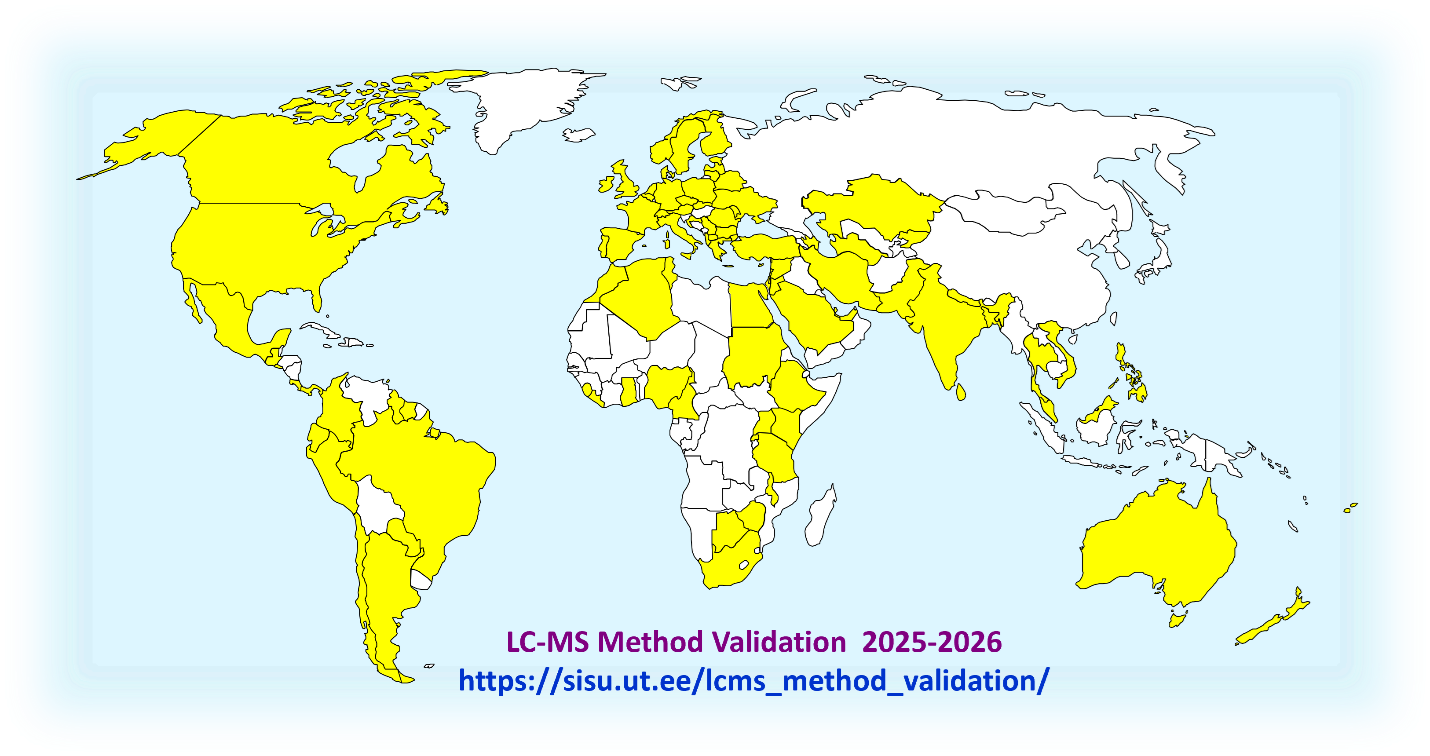
On Tuesday, December 16, 2025 the web course LC-MS Method Validation was launched for the tenth time as a MOOC (Massive Online Open Course). There are 999 registered participants from 95 countries, ranging from Canada to New Zealand and from Peru to Thailand. The image above shows the countries where the participants come from.

This is a practice-oriented on-line course on validation of analytical methods, specifically using LC-MS as the technique. The course introduces the main concepts and mathematical apparatus of validation, covers the most important method performance parameters and ways of estimating them. The LC-MS validation course is delivered by a team of 7 teachers, each with their own specific area of competence. This way it is expected to offer the best possible knowledge in all the different subtopics of analytical method validation.

The full set of course materials is accessible from the web page https://sisu.ut.ee/lcms_method_validation/. The course materials include videos, schemes, calculation files and numerous self-tests (among them also full-fledged calculation exercises). In order to pass the course, the registered participants have to take all tests and get higher than 50% score from each of them. These tests are available to registered participants via the Moodle e-learning platform. Participants who successfully pass the course will get a certificate from the University of Tartu.

Our LC-MS validation activities at the IUPAC-DSM LC-MS validation workshop

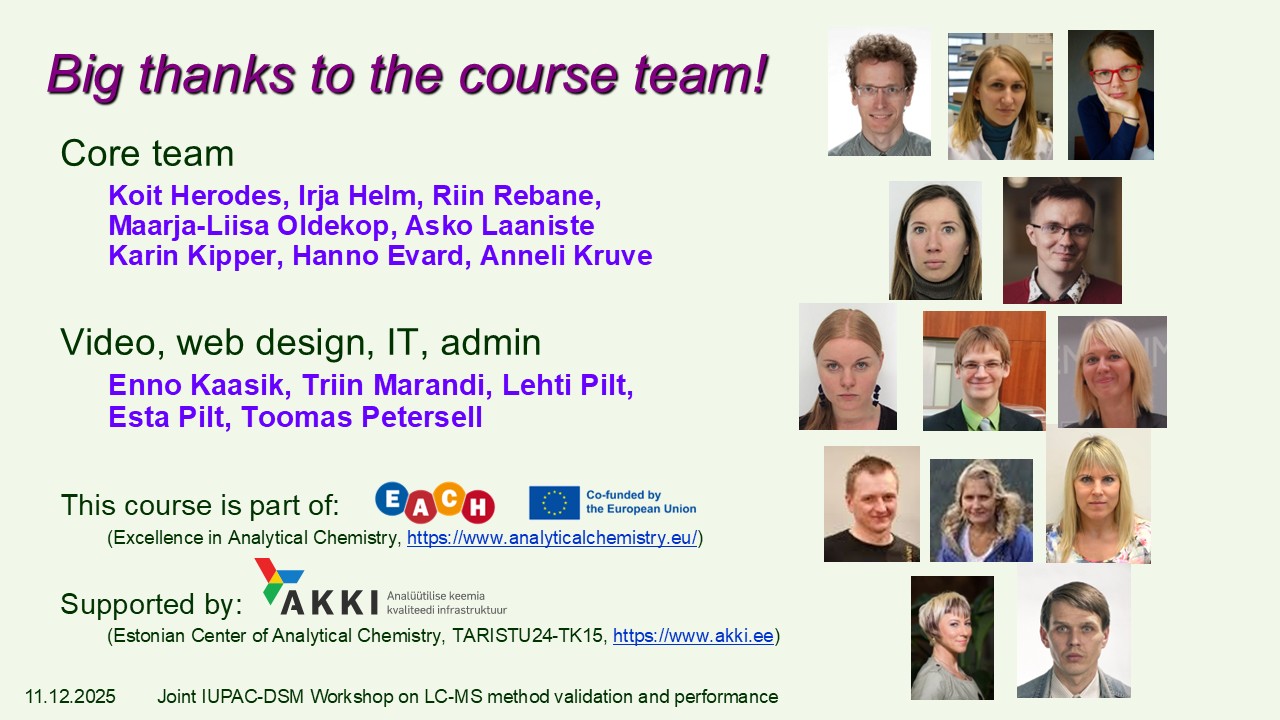
Riin Rebane, Asko Laaniste and Ivo Leito participated on 10-11.12.2025 in the Joint IUPAC-DSM Workshop on LC-MS method validation and performance, organised jointly by the IUPAC’s Division of Analytical Chemistry and the Mass spectrometry division (DSM) of the Italian Chemical Society.

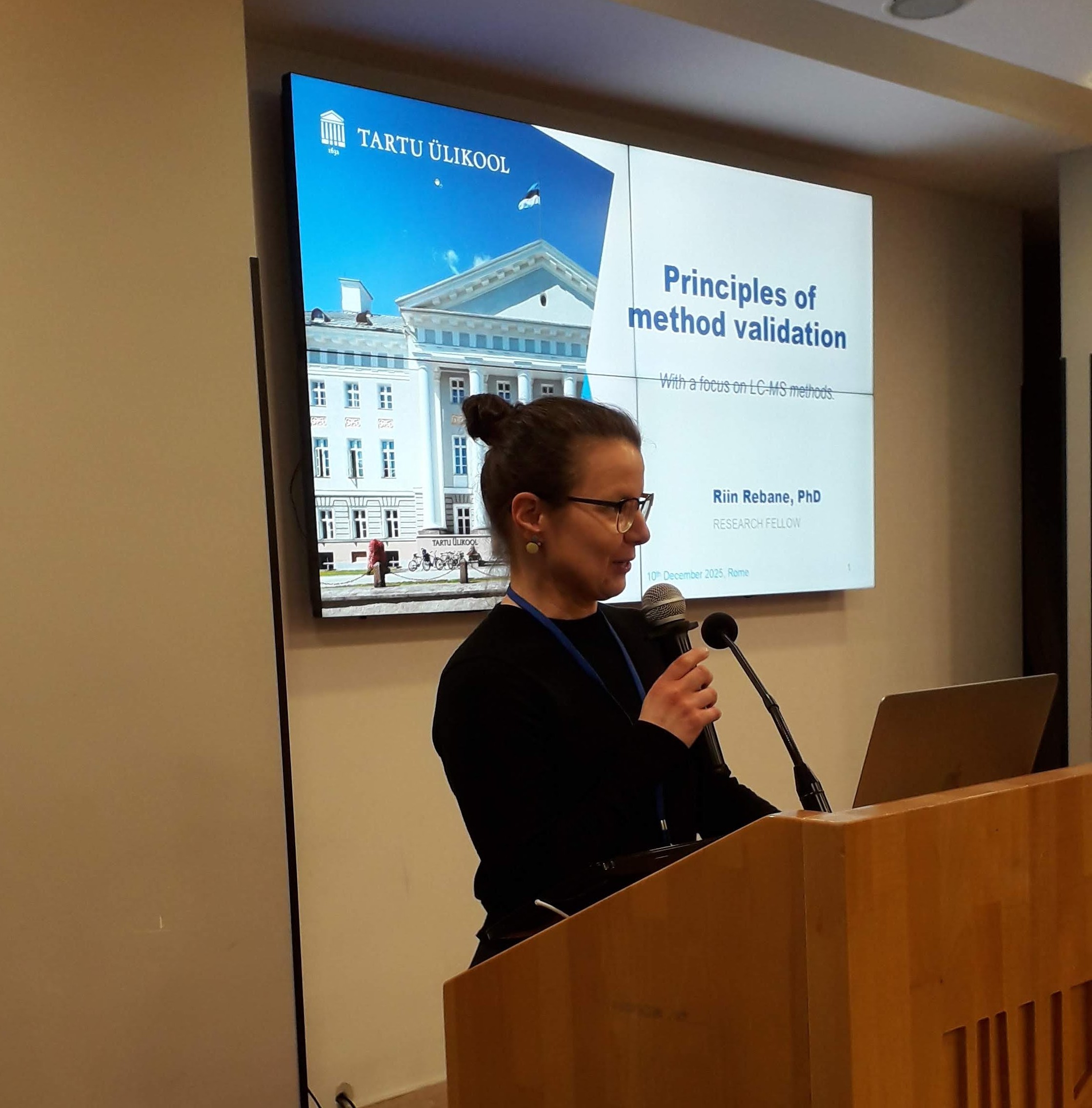
Riin presenting

Riin presented the opening keynote of the event titled “Principles of method validation”. Her presentation reframed LC-MS method validation as a risk-management process rather than a checklist of validation characteristics. By zooming out to the method’s intended purpose, each validation characteristic is linked to the specific risks it is designed to control. This view allows to build evidence that the method performs reliably under real-world conditions and is truly fit for purpose and produces results with known confidence.


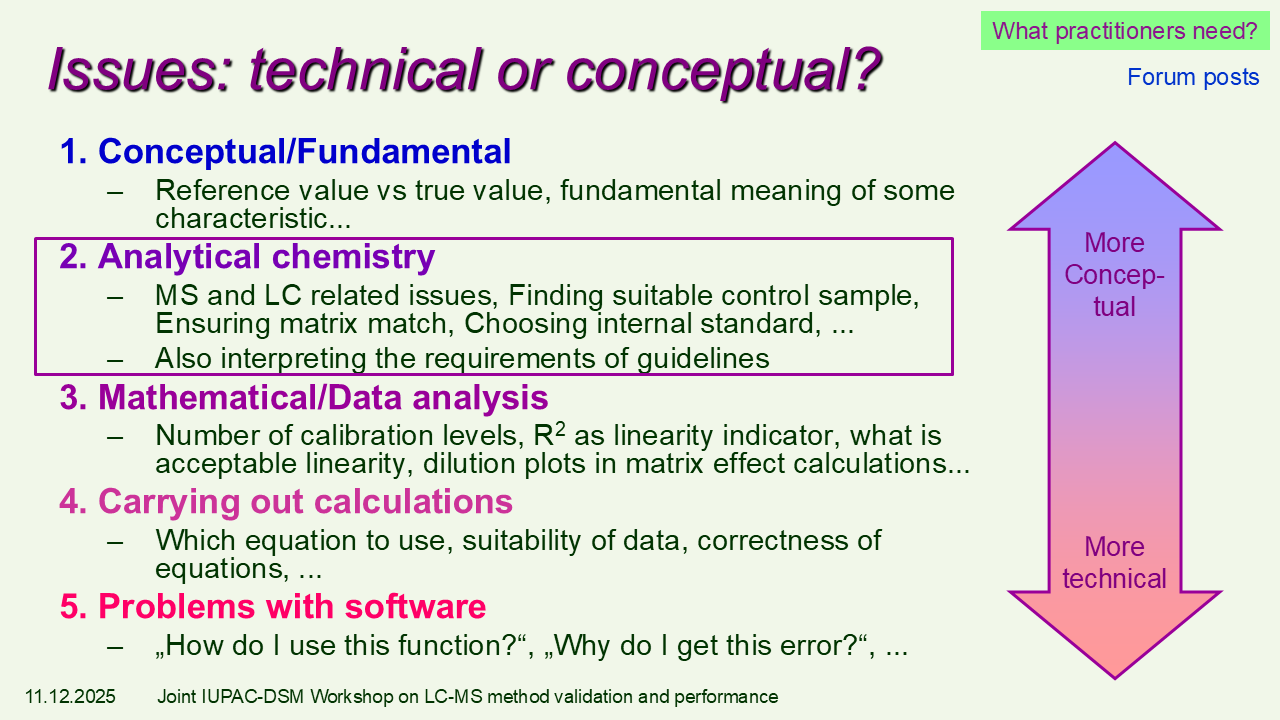
Ivo’s talk “What are the issues encountered in the real world? Lessons learned form an online validation course” presented an analysis of the main issues brought up by the participants of the nine editions of an online LC-MS method validation course (https://sisu.ut.ee/lcms_method_validation/). The analysis of 2640 course forum posts and 336 participant feedback submissions revealed that practitioners struggle a lot with calculations and spreadsheet software, which diverts effort from real “analytical hemistry” issues.  

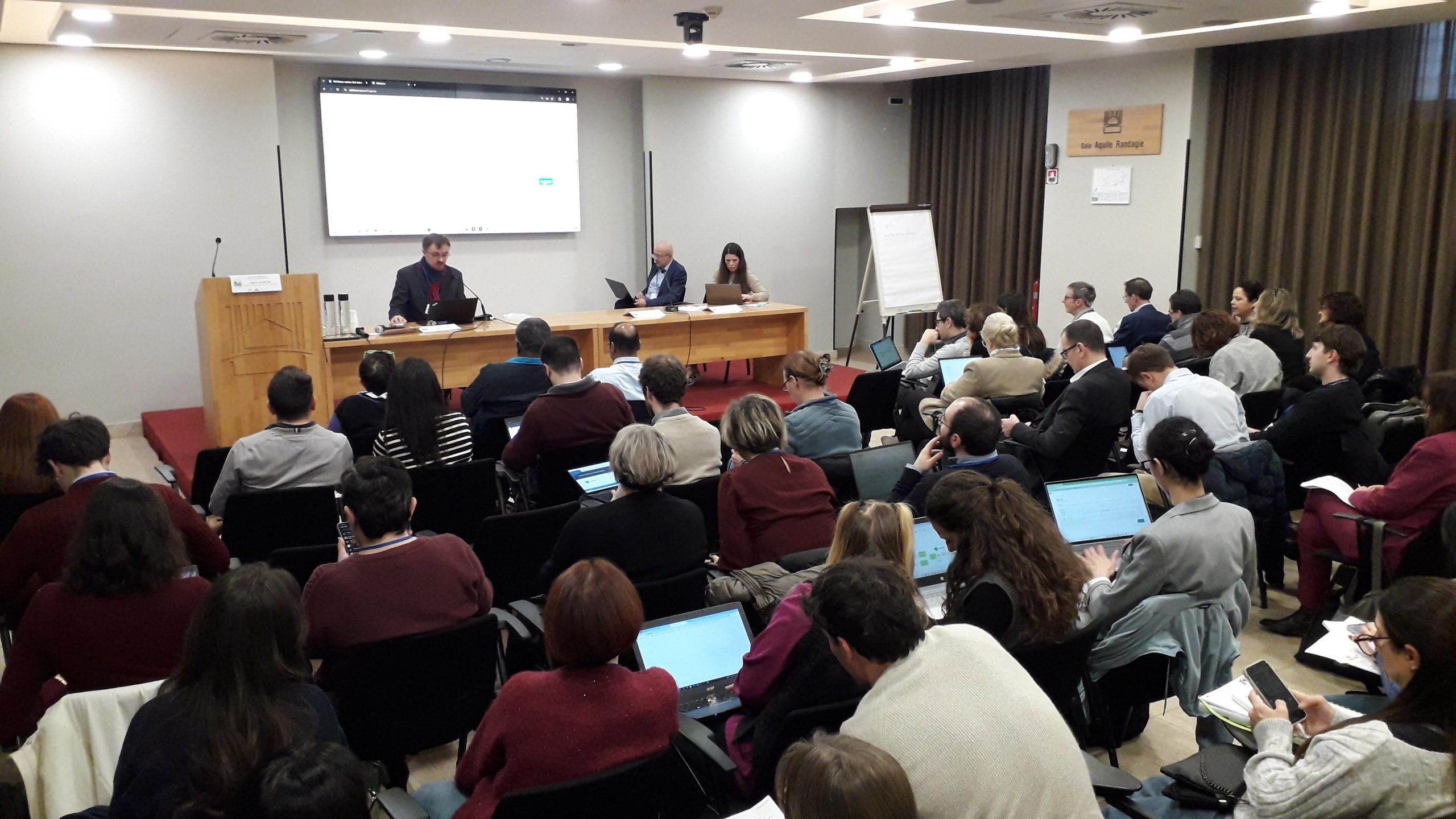
Asko leading the ValChrom session

Asko’s session “ValChrom open-access online validation software” was a workshop in the true sense of the word: a hands-on session on the online validation software ValChrom developed at UT. Participants had instant access to the software freely available in web and demo materials. Asko walked them through the whole process of ValChrom from start to finish, from defining analytes to customizing experimental plan with AI and finishing with automatically generated DOCX file with the whole validation data in it. ValChrom’s Design of Experiements (DoE) capabilities were also covered and it was nice to see that throughout the two days a big number of presentations also involved DoE one way or another, indicating a rising need for such tools.

All in all, the contributions of our team were highly appreciated, indicated by numerous questions, both during sessions and (especially) during coffee breaks.


Measurement uncertainty online course 12th run has successfully finished!

On May 14, 2025, the on-line course (MOOC) Estimation of measurement uncertainty in chemical analysis offered by the University of Tartu finished successfully. Eventually, altogether 1061 people registered from 100 countries. 525 participants actually started the course (i.e. tried at least one graded test at least once). The overall completion rate was 29%. The participation rate was 49% this year. The completion rate of the participants who started the studies was 59%, with 307 successfully finished participants. This result is quite stable during the 12 runs. This result can be considered good for a MOOC, especially for one that has quite difficult calculation exercises, which need to be done correctly with a limited number of attempts to complete the course. All statistics during the 12 years can be found in the table below. The participants were very active and asked lots of questions. The questions were often very much to the point and addressed things that are really important to analysts in their everyday work. The course has several forums (general and by topic), and during the course period, the overall number of forum posts was above 400 (!) (overall number of posts, both from participants and from teachers) and the forums are still active and posts are still coming in. We want to thank all participants for helping to make this course a success! We plan to repeat this course again in Spring 2026!

Paleoproteomics course by visiting Professor Matthew Collins

Prof. Collins (left) with the students demonstrating the working principles of mass spectrometry

From the 17th to the 21st of March, the Archemy group welcomed Professor Matthew Collins, a Professor of Paleoproteomics at University of Cambridge and the University of Copenhagen, at University of Tartu for a week-long paleoproteomics course.

The course, attended by students and researchers from University of Tartu and the Collège de France, covered the fundamentals, methods, and applications of ancient proteomic studies using both MALDI-TOF mass spectrometry and LC-MS/MS.

Since the attendees’ backgrounds varied from archaeologists to chemists and geneticists, the course began with a review of the fundamentals of organic chemistry. Masterfully, Prof. Collins continued with an introduction to mass spectrometry and a method called ZooMS – zooarchaeology by mass spectrometry, which is based on detecting marker peptides to determine animal taxonomy.

Students participating in the course

The course continued with an intensive introduction to analyzing the paleoproteome using LC-MS/MS and the opportunities it provides in analyzing ancient ways of life, for example, determining the species used for dairy production. However, the shortcomings of the methods were also discussed. In archaeological material, the most prevailing issues tend to be contamination with modern and more abundant proteins, as well as the deamination of amino acids due to their advanced age. Despite the difficulties in analyzing ancient proteomes, the debates on the final day still concluded that the methods are highly applicable in archaeological studies.

Prof. Matthew Collins led the intensive course within the project PaleoMIX: Nurturing Heritage Science with Novel Bioarchaeological Methods in the Eastern Baltics, PI Mari Tõrv (UT). Project partners include the University of Copenhagen, the University of Burgos, and the University of York.

Read more about paleoproteomics and its applications in an interview with Prof. Collins (in Estonian).

Measurement uncertainty online course 11th run has successfully finished!

On May 09, 2024 the on-line course (MOOC) Estimation of measurement uncertainty in chemical analysis offered by the University of Tartu finished successfully.

Eventually altogether 1047 people registered from 104 countries. 655 participants actually started the course (i.e., tried at least one graded test at least once). The overall completion rate was 38%. The participation rate was this year 63%. The completion rate of the participants who started the studies was 61%, with 398 successfully finished participants. This result is quite stable during the 11 runs, showing also a small improving tendency compared to years after the COVID pandemic. This result can be considered good for a MOOC, especially for one that has quite difficult calculation exercises, which need to be done correctly with limited number of attempts for completing the course. All statistics during the 11 years can be found in the table below.

The participants were very active and asked lots of questions. The questions were often very much to the point and addressed things that are really important to analysts in their everyday work. The course has several forums (general and by topic), and during the course period, the overall number of forum posts was around 300 (!) (overall number of posts, both from participants and from teachers) and the forums are still active and posts are still coming in.

We want to thank all participants for helping to make this course a success!

We plan to repeat this course again in Spring 2025 with a new breath in the course appearance!

Measurement Uncertainty online course: 1048 participants from 104 countries!

On Tuesday, March 19, 2024, the web course Estimation of Measurement Uncertainty in Chemical Analysis was launched for the eleventh time as a MOOC (Massive Online Open Course)!

Altogether 1048 participants from 104 countries are registered – the largest number of countries the course has ever had! In the map presented above, the yellow color marks the countries from where participants come. True, the map is coarse and some countries are small. Therefore, not all countries are visible. We are very happy, that we have 16 participants also from Ukraine this year. Slava Ukraini!

The entire course material is accessible from the web page https://sisu.ut.ee/measurement/uncertainty. The course materials include videos, schemes, calculation files, and numerous self-tests (among them also full-fledged measurement uncertainty calculation exercises). In order to pass the course, the registered participants have to pass six graded tests and get higher than 50% score from each of them. These tests are available to registered participants via the Moodle e-learning platform.

This course is run under the umbrella of the Estonian Center of Analytical Chemistry (https://www.akki.ee/) and forms a part of the measurements and chemical analysis related master programmes at UT: Applied Measurement Science (https://ams.ut.ee/) and Excellence in Analytical Chemistry (https://www.analyticalchemistry.eu/).