EuCheMS 2016: MOOCs in teaching analytical chemistry at University of Tartu

mooc_vs_traditional_courses_in_chemistryOn Sept 13, 2016 Ivo Leito gave a presentation Using MOOCs for teaching analytical chemistry: experience at University of Tartu at the EuCheMS 2016 Congress (Seville, Spain).

The presentation outlined the contents and organisation of the material in the on-line course Estimation of measurement uncertainty in chemical analysis, the different ways of using the on-line material (for independent learning, for self-testing, as an information source and as a basis for running as a MOOC) and the experience of running it as a MOOC (Massive Open Online Course) at University of Tartu during the three MOOC editions in 2014 to 2016. An important part of the presentation was devoted to analyzing the pros and cons of MOOCs as a way of teaching and in particular as a way of teaching analytical chemistry (or its subdisciplines). It was concluded that MOOCs do have advantages, especially if compared to short training courses for practitioners. The talk created quite some interest and discussions after the session.

Detailed discussion of this topic has been published: I. Leito, I. Helm, L. Jalukse. Anal Bioanal Chem 2015, 407, 1277–1281.
The course material is available for all interested people from https://sisu.ut.ee/measurement/

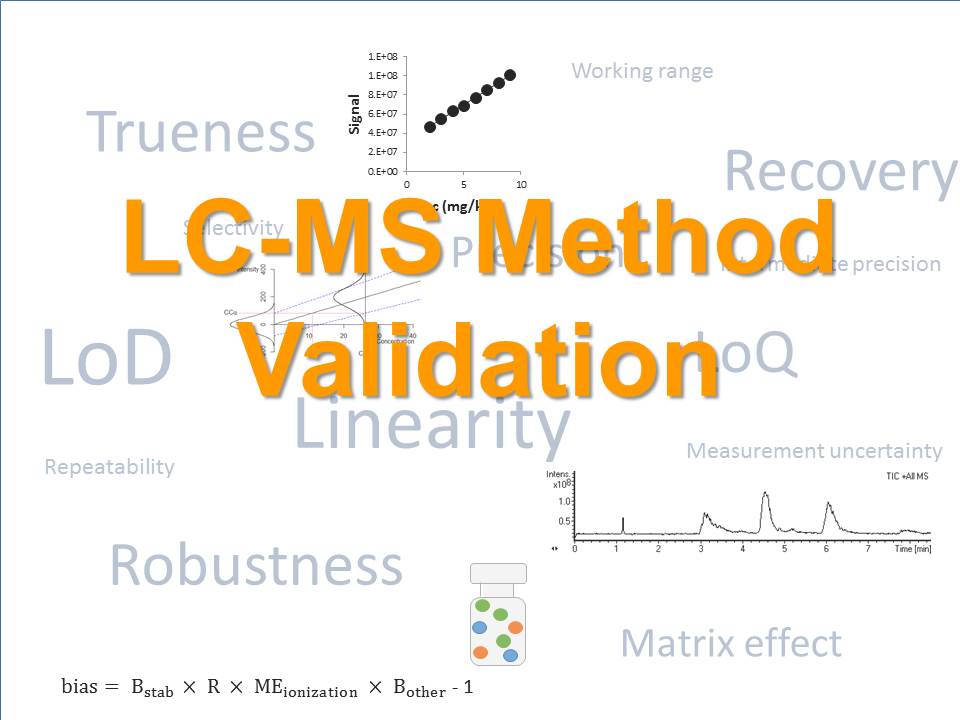
Preparation of a new MOOC course Validation of LC-MS analysis methods is currently underway by the group of analytical chemistry. The materials of the LC-MS validation course are nearing completion and are already available online.

Measurement uncertainty online course (MOOC) successfully finished!

UT_Measurement_Uncertainty_MOOC_Participants_2016On May 17, 2016 the MOOC Estimation of measurement uncertainty in chemical analysis offered by University of Tartu finished successfully.
Altogether 757 people registered (270 in 2014, 489 in 2015) from 85 countries. 455 participants actually started the course (i.e. tried at least one graded test at least once) and out of them 308 successfully completed the course (169 in 2015, 141 in 2014). The overall completion rate was 40% (52% in 2014, 34% in 2015). The completion rate of participants who started the studies was 67% (67% in 2014, 60% in 2015). These completion rates can be considered very good for a MOOC, especially one that has quite difficult calculation exercises, which need to be done correctly for completing the course.

The participants were very active and asked lots of questions. These were often very much to the point and addressed things that are really important to analysts in their everyday work. The course had several forums (general and by topic) and the overall number of posts to them during the course period reached beyond 500! (overall number of posts, both from participants and from teachers)

This active participation made teaching this MOOC a great experience also for us, the teachers. The discussion threads gave a lot of added value to the course and some of them triggered making important modifications to the course materials.

We want to thank all participants for helping to make this course a success!

We plan to repeat this course again in Spring 2017.

(Image: Wikimedia Commons)


Measurement Uncertainty MOOC: 744 participants from 85 countries!

UT_Measurement_Uncertainty_MOOC_Participants_2016On Monday, March 28, 2016 the web course “Estimation of Measurement Uncertainty in Chemical Analysis” was launched the third time as a MOOC (Massive Online Open Course).

The popularity of the course is this year somewhat higher than it was in 2014 and 2015: 744 participants from 85 countries (ranging from Bahama to Vietnam and from Zambia to Canada) have registered! (in 2014: 270 participants, in 2015: 400+) Image on the left shows the countries where the participants come from. As in the previous years, the majority of participants are from analytical laboratories, once again demonstrating the continuing need for training in measurement uncertainty estimation in analytical chemistry.

The full course material is accessible from the web page https://sisu.ut.ee/measurement/uncertainty. Some developments and improvements have been made to the course material, in particular, some more self-tests ave been added. The course materials include videos, schemes, calculation files and numerous self-tests (among them also full-fledged measurement uncertainty calculation exercises). In order to pass the course the registered participants have to take six graded tests and get higher than 50% score. These tests are available to registered participants via the Moodle e-learning platform. Participants who successfully pass the course will get a certificate from the University of Tartu.

It is planned to run this course as MOOC again in Spring 2017.

(Image: Wikimedia Commons)


Measurement Uncertainty MOOC, Mar 28 – May 8, 2016: Registration is open!

Measurement_Uncertainty_MOOC_Course_UTThe third edition of the MOOC (Massive Open Online Course) Estimation of Measurement Uncertainty in Chemical Analysis will be running during Mar 28 – May 8, 2016. Registration is open!

We currently have more than 250 registered participants from more than 50 countries.

The full course material is accessible from the web page https://sisu.ut.ee/measurement/uncertainty. The course materials include videos, schemes, calculation files and numerous self-tests (among them also full-fledged measurement uncertainty calculation exercises). In order to pass the course the registered participants have to take six graded tests and get higher than 50% score. These tests are available to registered participants via the Moodle e-learning platform. Participants who successfully pass the course will get a certificate from University of Tartu.

You are welcome to distribute this message to potentially interested people!


Using MOOCs for teaching analytical chemistry: experience at University of Tartu at the Euroanalysis 2015

Leito_Measurement_Uncertainty_MOOC_Euroanalysis_2015On Sept 07, 2015 Ivo Leito gave a presentation Using MOOCs for teaching analytical chemistry: experience at University of Tartu at the Euroanalysis XVIII (Bordeaux, France).

The presentation outlined the contents and organisation of the material in the on-line course Estimation of measurement uncertainty in chemical analysis, the ways of using it (for independent learning, for self-testing, as an information source and as a basis for running as a MOOC) and the experience of running it as a MOOC (Massive Open Online Course) at University of Tartu in spring 2014 and 2015. Part of the presentation was devoted to analyzing the pros and cons of MOOCs as a way of teaching and in particular as a way of teaching analytical chemistry (or its subdisciplines). It was concluded that MOOCs do have advantages, especially if compared to short training courses for practitioners. The talk created quite some interest and discussions after the session.

Detailed discussion of this topic has been published: I. Leito, I. Helm, L. Jalukse. Anal Bioanal Chem 2015, 407, 1277–1281.
The course material is available from https://sisu.ut.ee/measurement/