Dr. Matti Laan – Laser cleaning in cultural heritage

Yesterday, on the 7th of May, Associate Professor emeritus of physics Matti Laan gave a highly interdisciplinary lecture about laser cleaning in the field of cultural heritage.

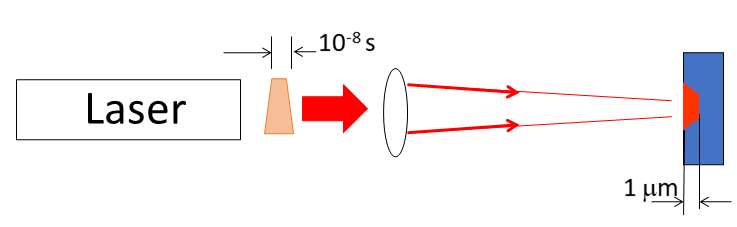
On this project, Dr. Laan (presenting his lecture in the picture on the right) worked with the late Associate Professor emeritus of chemistry Tullio Ilomets. Dr. Laan gave an exciting lecture about different lasers (e.g., Nd:YAG, XeCl, Er:YAG) and which of them is most suitable for laser cleaning of various artefacts (such as paintings or sculptures). For this laser ablation is used, which removes any undesired material (including ageing products and materials from previous conservation works) layer by layer.

Most of the listeners participated via the Zoom platform – over 70 physics, chemists, conservators, material scientists, and people from other disciplines joined in this interdisciplinarity lecture. The lecture was organised by our Cultural Heritage workgroup, Institute of Physics, and The Estonian Academy of Arts in the framework of Dr. Signe Vahur’s PRG1198. The recording (in Estonian) can be found here.

Webinar “Mobile Phase pH in Liquid Chromatography”

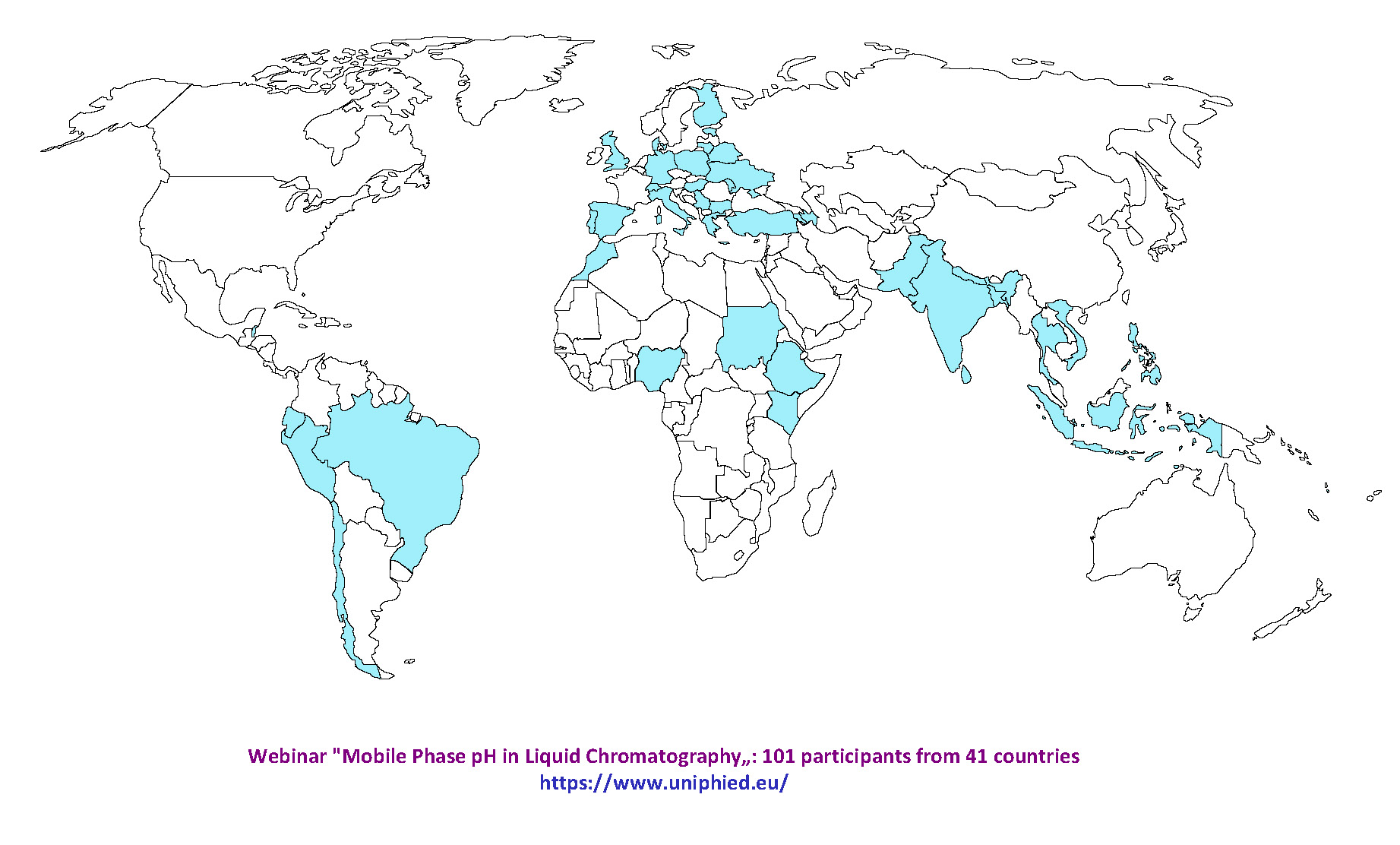
On Apr 29, 2021 the webinar “Mobile Phase pH in Liquid Chromatography” took place. Altogether 101 people participated from 41 countries, ranging from Portugal to Philippines and from Peru to Nepal.

It is well known that in liquid chromatography, mobile phase pH is an important parameter, significantly affecting the retention of acidic and basic analytes. Yet, mobile phase pH is tricky to measure because mobile phases are usually aqueous-organic mixtures and in the case of gradient elution mobile phase composition gradually changes during elution. The topics covered during the webinar were:

— Different possibilities to express pH in liquid chromatography (LC)
Unified pH (pHabs): the concept and measurements methods
— The applications and limitations of different pH expressions in LC

Numerous questions were asked by the participants that indicated the importance of the topic and the need for a more robust conceptual framework for handling the topic of pH in liquid chromatography. Contributing to this, via the pHabs concept, is one of the aims of the UnipHied project.

The webinar was organized in the framework of the PRG690 project from the Estonian Research Council and the  UnipHied project (www.uniphied.eu), which  is funded from the EU’s EMPIR programme, co-financed by the Participating States and from the European Union’s Horizon 2020 research and innovation programme. Additional support from: EU Regional Development Fund (TK141 “Advanced materials and high-technology devices for energy recuperation systems”) and Estonian Center of Analytical Chemistry (www.akki.ee)


New Open Access publication: GC-MS analysis of aged oil paints

Our group recently published a new Open Access research article – Quantitative GC-MS Analysis of Artificially Aged Paints with Variable Pigment and Linseed Oil Ratios, Molecules 2021, 26 (8), 2218

In this freely accessible publication, seven sets of artificially aged paints prepared from a pigment (chrome oxide green, natural cinnabar, Prussian blue, red ochre, hematite + kaolinite, zinc white, or yellow ochre) and linseed oil were analysed with GC-MS. One of the main aims was to study if the pigment concentration in the paint samples affects the drying of the linseed oil. 

The palmitic acid to stearic acid ratio (P/S), azelaic acid to palmitic acid (A/P), and the relative content of dicarboxylic acids (∑D) showed, that besides the type of the pigment, also the concentration of the pigment can influence these values that are commonly used to identify the type of the oil or to characterize how dried is the sample. 

The absolute quantification of stearic acid (see figure on the right) showed that the drying of all paint sets (except for zinc white) were influenced by the pigment concentration. Therefore, this is another factor that needs to be taken into account when studying aged oil paints. 


Dr. Signe Vahur has been presented to the AcademiaNet!

This year the Estonian Research Council has presented 49 female Estonian scientists to the AcademiaNet database. From the Unversity of Tartu, seven names were given, including Dr Signe Vahur (on the picture), a research fellow in our Chair of Analytical Chemistry.

The AcademiaNet contains profiles of excellent female researchers from all disciplines. The database enables wider recognition worldwide, allowing scientists and research institutions to search for suitable collaborations, experts, or speakers. The database was initiated in 2010 and, by now, has the profiles of 3000 outstanding female researchers from all over the world.

Since 2003, Dr Signe Vahur has done research in the field of conservation science and specialized in the investigation of cultural heritage objects (paints, textiles, paper, resinous materials, etc.) with a vast collection of instrumental techniques. She has also worked as a conservator of polychrome objects and now is the leader of our Cultural Heritage workgroup. Recently, her team started to develop a new device that could be used to analyze valuable cultural heritage objects, so there’s only more to come!

Signe, congratulations from us all!

Webinar “Mobile Phase pH in Liquid Chromatography” on April 29, 2021

It is well known that in liquid chromatography, mobile phase pH is an important parameter, significantly affecting the retention of acidic and basic analytes. Yet, mobile phase pH is tricky to measure because mobile phases are usually aqueous-organic mixtures and in the case of gradient elution mobile phase composition gradually changes during elution.

Mobile phase pH is the topic of an upcoming webinar “Mobile Phase pH in Liquid Chromatography”, which we will organise on 29.04.2021 at 13:00 – 16:00 (Central European time: France, Germany, …) via the Zoom platform. Registration to the webinar is now open at this registration link.

The topics that we plan to cover are:

— Different possibilities to express pH in liquid chromatography (LC)
— Unified pH (pHabs): the concept and measurements methods
— The applications and limitations of different pH expressions in LC

The webinar is organised in the framework of the project 17FUN09 “UnipHied”, which is funded from the EU’s EMPIR programme, co-financed by the Participating States and from the European Union’s Horizon 2020 research and innovation programme.


Measurement Uncertainty online course: 925 participants from 97 countries!

On Tuesday, March 23, 2021, the web course Estimation of Measurement Uncertainty in Chemical Analysis was launched for the eighth time as a MOOC (Massive Online Open Course)!

Currently, 925 participants from 97 countries are registered – the largest audience the course has ever had! In the map present above, the orange color marks the countries with stable participation: these countries were presented in our course last year, and so are today. The yellow color denotes the countries where we, unfortunately, do not have participants this year. The green color corresponds to the countries where we did not have participants last year, but are present now. True, the map is coarse and some countries are small. Therefore, not all countries are visible. However, altogether 15 countries are added this year!

The full course material is accessible from the web page https://sisu.ut.ee/measurement/uncertainty. The course materials include videos, schemes, calculation files and numerous self-tests (among them also full-fledged measurement uncertainty calculation exercises). In order to pass the course, the registered participants have to pass six graded tests and get a higher than 50% score from each of them. These tests are available to registered participants via the Moodle e-learning platform.

This course is run under the umbrella of the Estonian Center of Analytical chemistry and forms a part of the measurements and chemical analysis related master programmes at UT: Applied Measurement Science and Excellence in Analytical Chemistry.


Aminoacridines as matrix materials for the analysis of complex samples in MALDI(-)-MS

A highly interdisciplinary study ranging from computational chemistry to cultural heritage has now been published – Experimental and Computational Study of Aminoacridines as MALDI(-)-MS Matrix Materials for the Analysis of Complex Samples, J. Am. Soc. Mass Spectrom. 2021.  

9-aminoacridine (9-AA) is a well-known matrix material used for the MALD(-)-MS analysis. Among the other monoaminoacridines (AAs), only 3-AA has been tested once (in our cultural heritage workgroup) but the suitability of the other AAs was unknown.

To fill this gap, the capabilities of all five AAs were studied by analysing different materials (stearic acid, colophony resin, dyer’s madder, and a resinous sample from a 16th-century shipwreck). Also, a vast range of properties for these aminoacridines were experimentally or computationally characterized (including UV-Vis absorption and fluorescence spectra, proton transfer reactions, crystallization). 

The results demonstrated, that all the AAs are suitable for the MALDI(-)-MS analysis of these materials. Interestingly, 3-AA and 4-AA outperformed the other AAs (including the best-known 9-AA) and were the preferred matrices for the analysis of samples studied in this work.   


Acidity scale in acetonitrile: 231 pKa values spanning 30 orders of magnitude

The equilibrium acidity scale (pKa scale) in acetonitrile (MeCN) has been supplemented by numerous new compounds and new ΔpKa measurements and has been published in Eur. J. Org. Chem. 2021, 1407–1419 (Open access). The pKa scale now contains altogether 231 acids – over twice more than published previously – linked by 566 ΔpKa measurements and spans between the pKa values of hydrogen iodide (2.8) and indole (32.57), covering close to 30 orders of magnitude. The acids have wide structural variety, ranging from common families – phenols (e.g. picric acid, alizarin, polyhalogenophenols), carboxylic acids (e.g. acetic, benzoic, retinoic and sorbic acid), sulfonic acids, hydrogen halides) to highly special molecules (chiral BINOL catalysts, bis(benzoxazole-2-yl)methanes, polyfluorinated compounds) and superacids (fluorinated sulfonimides, cyanoform, tetracyanopropenes).

Measurement results acquired over the last 15 years were added to the scale and new least squares treatment was carried out. The treatment yielded revised pKa values for the compounds published previously, with the root mean square difference between revised and previous values 0.04, demonstrating very good stability of the scale.

Correlation equations were developed for estimating pKa values for the studied types of compounds in water, DMSO, DMF and 1,2-dichloroethane on the basis of pKa values in acetonitrile. These equations enable predicting pKa values with an average error around or less than 1 pKa unit, which is a sufficient accuracy for many applications.

The scale is expected to be a useful tool for the widest possible research areas in organic chemistry, electrochemical power sources, catalysis, etc.

Registration is now open: Measurement Uncertainty online course starts exactly in one month!

The 2021 edition of the web course (MOOC) Estimation of Measurement Uncertainty in Chemical Analysis will be running from March 23 to May 4, 2021. Registration is now open!

The full course material (as well as the registration link) is accessible from the web page. The course materials include videos, schemes, calculation files, and numerous self-tests (among them also full-fledged measurement uncertainty calculation exercises) and examples. Almost all areas of analytical chemistry are addressed, ranging from simple titrations to sophisticated instrumental analysis, such as determining pesticide residues by LC-MS.

In order to pass the course, the registered participants have to take six graded tests and get a higher than 50% score in every graded test. These tests are available to registered participants via the Moodle e-learning platform.

Participants who successfully pass the course will get a certificate from the University of Tartu. A digital certificate of completion is free of charge. A certificate of completion on paper can be requested for a fee of 60 euros.

You are welcome to distribute this message to potentially interested people!

LC-MS Method Validation online course finished with 28% completion rate!

Altogether 791 people were registered from 86 countries. 338 participants actually started the course (i.e. tried at least one graded test at least once) and out of them 221 successfully completed the course. The overall completion rate was 28%. The completion rate of participants who actually started the studies was 65%. All statistics during the five years can be found in the table below.

Year No of registrations No of countries Active participants Completion rate: Overall Completion rate: Participants who started studies
2017 303 61 224 55% 75%
2018 424 71 236 37% 67%
2019 426 70 227 29% 55%
2020 515 77 267 31% 60%
2021 791 86 338 28% 65%

Both the overall completion rate, as well as the completion rate of those participants who actually started the course have stabilized. The latter completion rate can be considered very good by any measure. As has been the usual case with our online courses, the questions from the participants were often very interesting, often addressed things that are really important to analysts in their everyday work. Such discussions made teaching this course a great experience also for us, the teachers!

We want to thank all participants for helping to make this course a success!

We plan to repeat this course again in Autumn-Winter 2021-2022.