13th biennial conference of Infrared & Raman User Group, shortly IRUG, was for the first time ever held in Sydney, Australia in a beautiful Art Gallery of New South Wales. IRUG conferences are gathering people using IR and Raman spectroscopy for the analysis of cultural heritage, architecture, and forensic materials. This year 101 people were attending, including Dr Signe Vahur and PhD student Pilleriin Peets from our group. Pilleriin was also introducing her results in analyzing textile fibres with IR spectroscopy in an oral presentation. Development of methods for the analysis of various textiles using ATR- and reflectance FT-IR spectroscopy turned out to be very relevant: throughout all three days, many people approached to discuss the topic, ask questions and advice or to make contacts for later cooperation. We were also very glad that conference participants were interested in our ATR-FT-IR spectral database of cultural heritage and conservation materials, available here.
Three days were filled with a wide range of interesting presentations from analysis of Aboriginal Australian pigments and identification of contents from the coffin of a 2500-year-old Egyptian mummy Mer-Neith-it-es to investigations of cultural heritage materials using neutron techniques. Besides the analysis of traditional pigments, organic pigments, especially synthetic organic pigments and their use in art were discussed (oral presentation by Dr Suzanne Lomax and Dr Steven Saverwyns). Another very interesting and thought-provoking presentation was done by Dr Gregory Smith from Indianapolis Museum of Art. He discussed the difficulties in getting accurate standard reference materials in the field of cultural heritage analysis. His results showing how many false materials can be found on the market (and not only vendors like Kremer Pigmente, but also providers like Sigma Aldrich) were very surprising.
All in all, IRUG 13 conference offered three full days of interesting presentations, a lot of knowledge and useful tips for further research and a pleasant atmosphere with excellent company.
Comparing Electrospray Ionization Efficiencies of Derivatized and Non-Derivatized compounds
Main concern while measuring ionization efficiency (IE) of derivatized compounds is that derivatized compounds are in complex mixtures. To overcome this problem, we developed a chromatographic method to separate these compounds and measure their ionization efficiencies.
If ionization efficiencies of derivatized compounds are measured without chromatographic separation in a complex mixture, which includes analytes, derivatization reagents and different by-products, then matrix effects could occur. This problem can be solved if we first separate these compounds from each other and then measure ionization efficiencies.
Chromatographic method
To separate different compounds, we used a simple chromatographic gradient elution method. One might think, that if compounds have different retention time, then they also elute at different organic phase percentages which obviously affects measured ionization efficiency values. The effect is not so significant, but we could manage to model it and take it into account to level all newly measured ionization efficiency values to a previously measured scale.
logIE measurements
We carried out ionization efficiency measurements with liquid chromatography electrospray ionization mass spectrometry (LC/ESI/MS) and constructed IE scales with a calibration curve for compounds with and without derivatization reagent diethyl ethoxymethylenemalonate (DEEMM). Additionally, we investigated eluent composition effects on ionization. Measured compounds were mainly amino acids but also included some biogenic amines.
Results
We saw, that
- Derivatization increases IE for most of the compounds (by an average of 0.9 and up to 2 – 2.5 logIE units) and derivatized compounds have more similar logIE values than their underivatized variants.
- Measurement of derivatized compounds is possible from the mixture when using chromatographic separation technique.
- It was also noted, that using chromatographic separation instead of flow injection mode tends to slightly increase ionization efficiency.
We managed to link all our results with existing ionization efficiency scale and therefore widen the scale and get comparable logIE values for measured derivatized compounds.
More information could be found in an article published recently at Journal of Mass Spectrometry.
EACH programme at the Sample Treatment 2018 Conference!
On Dec 3, 2018, Ivo Leito gave a presentation at the Sample Treatment 2018 conference (Caparica, Portugal) about the Excellence in Analytical Chemistry (EACH) Erasmus Mundus master’s programme that is coordinated by our group.
The focus of the talk was sample preparation and how is it included in the EACH programme. A key feature of the presentation was a question to the participants as for what else could/should the EACH programme contain in terms of sample preparation, especially keeping in mind emerging techniques. Another one was a call to come to teach at EACH as visiting scholar. During the subsequent coffee breaks a number of people approached Ivo and interesting ideas were proposed as to what to include into the programme’s set of covered sample preparation approaches (dialysis, different microextraction techniques, sonication, etc). Several people also expressed interest to contribute to the programme as visiting scholars.
Call of applications to the EACH visiting scholar scheme is constantly open at the EACH Visiting scholars page and submitting of application is non-binding, so it is encouraged also if you are not yet sure whether you will come.
We are thankful to all participants for their feedback and ideas!
Group seminar at Pühajärve

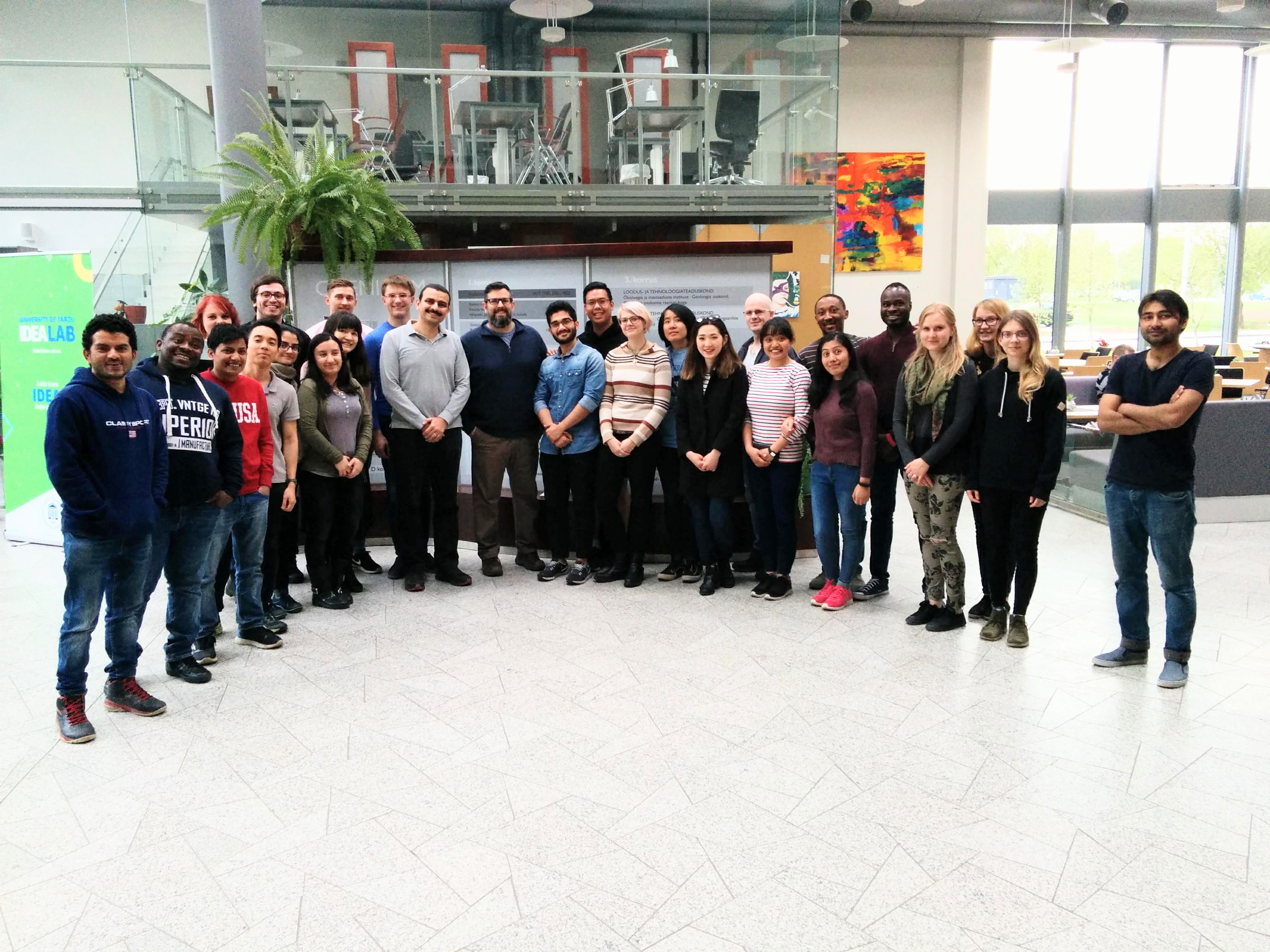
From 24th to 25th of November our group had a traditional biannual seminar in Pühajärve Spa hotel. The seminar is a nice opportunity to learn about what the group members are doing and which challenges they are tackling. The presentations covered a broad domain of analytical chemistry from fundamental acid-base studies to bioanalyses and analyses of cultural heritage.
Ambient ionization and fluoroalcohols to improve bioanalysis
The first session was focusing on the bioanalytics. Max, a PhD fellow doing an internship in London right now, presented the results of drug analyses from a music festival. Next to strongly varying drug dose, the problem is the strongly varying dissolution of corresponding dose. Next two presentations presented by Rūta, a PhD fellow, and Krit, her undergraduate student introduced fluoroalcohols as novel LC eluent additives and their effect on retention mechanism and electrospray sensitivity. It was really interesting how strongly and unexpectedly differently some fluoroalcohols may change the retention mechanism.
The reliability of fluorescence measurement
The second session focused on acid-base and coordination chemistry. Alo, a PhD fellow, presented his improvements and challenges in the synthesis of bambusuril derivatives. Elisabeth, a master student, introduced 19F NMR measurements of pKa of fluorinated compounds in acetonitrile. Sigrid, a PhD fellow, gave a lecture on how to measure correct fluorescence spectra accounting all effects that may affect the spectra. She showed the importance of concentration and the inner filter effects correction on fluorescence spectrum. Andre, a PhD fellow, wrapped up the seminar with the presentation of his results in gas phase acidity measurements.
Did I get real cashmere scarf from the market?
The third session was focusing on the analysis of cultural heritage. Eliise, a PhD fellow, presented the comparison of four most applied derivatization procedures for analysis of binders in GC. Pilleriin, a PhD fellow, presented her results of textile analyses and a model developed to classify unknown textiles using ATR-FT-IR spectroscopy. Markus, a master student, presented his work on coupling LC with nano-ESI FT-ICR-MS. Juhan, an undergraduate student, introduced his work on acid-base measurements of fluorophoric pH sensor molecules.
After inspiring presentation and fruitful discussions, we had a nice opportunity to relax in the spa and sauna. Additionally, group members discussed with Prof. Leito and Associate Prof. Herodes the SR-15 report from IPCC.
Is open science in terms of metadata really possible?
Next day was kicked off by Astrid, a PhD fellow, who compared the measurement of binding constants using isothermal calorimetry and NMR. Next, Piia, a PhD fellow, introduced her results on using the data from the literature to test, validate and improve the electrospray ionization efficiency prediction model. The take-home message from Piia’s presentation was the need for data integrity on results one is reporting and clear explanations on how one obtained these results. Additionally, a machine-readable format of the structure is a great help to simplify data mining from literature. Next, Jaanus, a PhD fellow introduced the results from a collaboration with a visiting PhD fellow Tingting Wang from DTU, Denmark. He showed the results of standard substance free quantification in the example of pesticides in food matrices. Ernesto, a PhD fellow, introduced his doctoral project on designing and describing the anionic derivatization reagents in LC/MS.
What’s causing this smell?
The second day was wrapped up by Associate Prof. Koit Herodes. He showed us a case study on the analysis of smell of ruined goods. Finally, he presented the current edition of validation software our group is developing to simplify and automate the validation in LC/MS analyses.
Thanks to all participants for interesting and inspiring presentation and for fruitful discussions.
The biggest development of the SI system in decades!
Today, On Nov 16, 2018 the General Conference on Weights and Measures (CGPM) unanimously decided to fundamentally remake the SI system of measurement units. Perhaps the most important change is that the kilogram will not be defined via a physical artefact – the platinum-iridium cylinder – but in terms of the Planck constant. As a result, for the first time the entire SI system will be defined entirely on the basis of fundamental constants, which has been the aim for decades!
The change will become effective on the 2019 World metrology day – May 20, 2019.
More information can be found in the post CGPM votes unanimously to change the SI by Dr Steve Ellison at the Eurachem website.
(Image: Wikipedia)
UnipHied EMPIR Network at Baltic Electrochemistry Conference 2018
On Nov 05, 2018 Ivo Leito gave a presentation Unified pH about the pan-European research network of fundamental pH Research UnipHied (www.uniphied.eu) at the 7th Baltic Electrochemistry Conference organized by the University of Tartu.
The presentation started with explaining the need for the experimental realization and measurement capability of unified pH (pHabs). Thereafter the current state of art of measuring pHabs values was described and finally, some first exemplary results were highlighted.
The presentation created a lot of interest from the participants and roughly as many questions were asked as for the other four presentations of the same session put together!
As of now, it is not possible to compare pH values of solutions made in different solvents, as every solvent has its own pH scale. This situation is highly unfortunate, since it causes confusion and inaccuracies into many fields, extending far beyond the specific field of acid-base chemistry. Examples are industrial catalytic processes, food chemistry, liquid chromatography, etc.
The central aim of the UnipHied network is to establish at international level measurement capability of pHabs values that would be applicable also at routine laboratory level. The two key activities for achieving that are creating a reliable method for the experimental or computational evaluation of the liquid junction potential and between aqueous and non-aqueous solutions and developing a coherent and validated suite of calibration standards for standardizing routine measurement systems in terms of pHabs values for a variety of widespread systems (e.g., industrial mixtures, soils/waters, food products, biomaterials).
The partners of the UnipHied network are LNE (France, coordinator), BFKH (Hungary), CMI (Czech Republic), DFM (Denmark), IPQ (Portugal), PTB (Germany), SYKE (Finland), TÜBITAK-UME (Turkey), Freiburg University (Germany), ANBSensors (United Kingdom), FCiencias.ID (Portugal), UT (Estonia, initiator).
UnipHied is funded from the EMPIR programme (project 17FUN09) co-financed by the Participating States and from the European Union’s Horizon 2020 research and innovation programme.
UT analytical chemistry education activities at EcoBalt 2018 Conference
On Oct 26, 2018, Ivo Leito gave a presentation titled “Analytical chemistry education activities at University of Tartu” at the EcoBalt 2018 conference in Vilnius, Lithuania.
The presentation contains information about the online courses LC-MS Method Validation and Estimation of Measurement Uncertainty in Chemical Analysis, as well as the recently published tutorial reviews (Validation I, Validation II, LoD I, LoD II) that form the basis of the LC-MS Method Validation course.
The presentation also addresses the international master’s programmes Applied Measurement Science and Excellence in Analytical Chemistry at the University of Tartu.
The last part of the talk is devoted to the Eurachem 2018 General Assembly and Workshop that will take place in Tartu on May 20-21, 2018. The topic of the workshop is “Validation of targeted and non-targeted methods of analysis”.
Anneli is in the Power List 2018 of the Analytical Scientist
The Analytical Scientist compiled the Top 40 Under 40 Power List to celebrate the gifted and successful young scientists in analytical science. One of our group members, Dr. Anneli Kruve, leading electrospray ionization studies subgroup, was nominated to this list.
Dr. Anneli Kruve defended her PhD thesis – “Matrix effects in liquid-chromatography electrospray mass-spectrometry” in University of Tartu in 2011 under the supervision of prof. Ivo Leito and dr. Koit Herodes. Right after she got her first personal funding and established the electrospray ionization efficiency studies group. In addition to understanding the ionization mechanism for small molecules in electrospray, she is interested in using charged nanodroplets generated by electrospray as an organic synthesis medium. In 2016 Dr. Anneli Kruve moved to Haifa, Israel to do her first post-doc at the Technion’s Schulich Faculty of Chemistry in Prof. Israel Schechter’s group. Right now, she is a Humboldt Fellow in the Institute of Chemistry and Biochemistry at Freie Universität Berlin in Germany in Prof. Christoph Schalley’s group.
In addition to excellent science, she is spreading the knowledge as she has designed and is actively lecturing different courses (instrumental analysis lab, statistics in analytical chemistry to name some) in analytical chemistry and statistics in analytical chemistry. She has also supervised several PhD and numerous MSc and BSc students.
Early inspiration
“I got started in organic synthesis but quickly joined a biomedical lab that needed students to operate a HPLC. From there, moving to LC/MS was a natural step. The ability to incorporate various skills from IT to synthesis with mass spectrometry-based research has kept me motivated to stay on this path.”
Research
“My field is structural and quantitative characterization of compounds with LC/ESI/IMS/MS. A key focus of mine is developing the possibility of giving a quantitative context to non-target LC/HRMS data without the need for standard substances.”
Greatest achievement
“I have already seen many students moving from our lab to the workforce and receiving positive feedback from their employers – that definitely makes a former supervisor happy!”
Prediction
“Mass spectrometry has already changed almost everything; its impact will increase further, as we make non-target screening more efficient with effective algorithms, and make it quantitative. I also have a dream technique: I sometimes wonder what the world would look like with MS-(gas phase)NMR . . .”
(The Analytical Scientist)
We are very happy and proud that Dr. Anneli Kruve received this well-deservedly recognition of being nominated to the Top 40 Under 40 Power List by the Analytical Scientist!
Milestone in catalysis research: approaching sub-ppm-level asymmetric organocatalysis
Recently our group had the pleasure of participating in a cutting-edge endeavor: characterizing the acidity of some extremely efficient strongly acidic organocatalysts. In the case of the Mukaiyama aldol reaction, the best of them (1) worked at low ppm to sub-ppm level, (2) gave excellent yields and (3) high enantiomeric selectivity as well as (4) turnover numbers (TON numbers) of hundreds of thousands.
The extent to which these four features occurred together in the same catalyst was so remarkable that the results were published in one of the most prestigious journals in chemical sciences: Nature Chemistry 2018, 10, 888-894.
The extremely demanding acidity measurements were performed by Dr Karl Kaupmees. The whole research was led by the group of professor Benjamin List – a worldwide known guru in the field of strongly acidic catalysts working at the Max-Planck-Institut für Kohlenforschung.
These results are expected to open new avenues in the development of powerful new organocatalysts.
(Photo by Andres Tennus: Karl doing acidity measurements in a glovebox under anhydrous conditions)
MSACL EU 5th Annual Congress & Exhibits in Salzburg
From the 9th to the 13th of September MSACL EU 2018 Annual Congress took place in the cosy city of Salzburg, Austria. This conference was designed to mass spectrometry audience mainly focusing on clinical applications. I had the opportunity to participate in this inspiring conference. Moreover, I had the possibility to give a talk. I introduced our studies on standard substance free quantitation in LC/ESI/MS analysis.
Lightning talks to encourage young scientists
Prof. Jerzy Adamski kicked off the conference with the plenary lecture on the topic “Metabolomics Messages on Human Health and Diseases”. As one of the main goals of this conference is to inspire and encourage the young scientists the next session was lightning talks. Poster presenters had 90 seconds and one slide to present their research and cultivate interest in their topic. Additional possibility to get to know mature scientist was the program “meet the experts”. There were short meetings as well as booth and poster tours with experts. I had the possibility to analyze some posters together with Dr. Oleg Mayboroda from Leiden University Medical Centre. It was nice to see how the experts look at the posters and how and which questions they ask. Dr. Mayboroda gave a checklist of how to assess the goodness of the PCA plot presented on posters.
Scientific highlights of the conference
There were 5 parallel sessions every day. For me, the three highlights were as follows. First of all, Dr. Mario Thevis gave a talk about mass spectrometry in sports drug testing. Also, Prof. David Millington gave an interesting talk about the role of tandem mass spectrometry in newborn screening. It was encouraging to see how the methods developed by his team save around 2500 newborns on yearly basis. Furthermore, Dr. Lyudmilla Yanshole gave a talk about using postmortem tissues for biomarker identification. It is an interesting study as for lots of diseases it is very difficult to get tissue of healthy species.
Standard substance free quantification LC/ESI/MS
I had the possibility to present for the first time a talk at an international conference. For that, I am most grateful for the MSACL organization and the scientific committee. I introduced the recent results on the feasibility of standard substance free (semi)quantitation in LC/ESI/MS using ionization efficiency prediction models. We have measured more than 2000 ionization efficiency values. We have incorporated 21 solvent compositions. The models are developed based on descriptors calculated from the 2D structure of compounds and the predictions perform well even in complex matrices, namely, bodily fluids. Our average misprediction of ionization efficiencies is less than 3.5 times mismatch. I thank the audience for fruitful discussions on the topic.
Salzburg is a lovely city with stunning views of the Alps. Furthermore, the organizer made our stay at the conference very enjoyable with the nice coffee breaks and warm buffet for lunch and dinner which were offered every day.