The new EACH and AMS intake has started exploring Tartu and with it, Estonian history and culture!
Merili (in the picture – in the middle of the front row), one of the newest EACH master students wrote about their visit to ERM:
“Last Saturday, a group of us visited the Estonian National Museum (ERM). We first got an overview of the main exhibition with a tour guide and then explored the rest of the museum ourselves. The design and interactivity of the exhibitions were amazing, and there was a lot to see, from relics of the stone age to beautiful artwork from the Golden Age of Estonian Art! What really made the museum visit special was the fact that while we were there, the President of Estonia himself was giving a tour there. So the day definitely was a crash course to Estonia!”
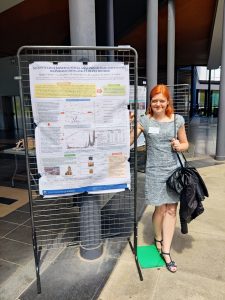
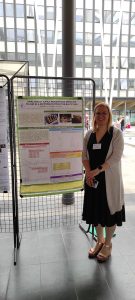
From the 27th of August to the 2nd of September, two members of our Chair of Analytical Chemistry – Ngan and Larissa – attended the 24th International Mass Spectrometry Conference (IMSC 2022) in Maastricht, The Netherlands. They both presented their posters under section B: Instrumentation and methods. All abstracts of the posters can be found in the abstract book.
Larissa: “The topics that stood out the most to me were proteomics and metabolomics, especially in the field of single-cell analysis. Overall, the talks were very interesting because there was a huge variety in what kind of investigated samples. Besides, vendors were able to present their latest products, mainly focused on LC-MS/MS instrumentation.”
Ngan: “The conference program had so diverse topics. Personally, I loved the talk by Livia S. Eberlin – a Curt Brunnée awardee about Guiding Medical Decisions with the MasSpec Pen Technology. Different workshops were held in the end of each day, for example: FeMS (females in MS), Forensics, and Career workshops in which professors, vendors, and recruiters gave speeches to inspire students to do internship, to find balance in work-life, or to connect mentees and mentors. The first day of the IMSC 2022 conference coincidentally happened to be on my birthday which made this experience very special and memorable to me. I had a chance to open my eyes and see the world through the MS glasses.”
Maastricht
Larissa’s poster was about derivatization-targeted analysis, where derivatization with diethyl ethoxymethylenemalonate (DEEMM) was combined with neutral loss scan mode for the detection of amino compounds.
Ngan presented her poster about Coumarin-based derivatization reagent for LC-MS analysis of amino acids. In this study, she reported a first time synthesized fluorogenic derivatization reagent in UT lab named Coumarin151-N-succinimidyl Carbamate (Cou151DSC) using HPLC compatible with different detectors: FLD or UV and ESI-MS/MS. An analytical method for derivatization of amino acids was developed for Kvass (Estonian soft drinks) as a demonstration. The results were compared with a commercially available reagent (6-Aminoquinolyl-N-Hydroxysuccinimidyl Carbamate aka 6-AQC) which has been commonly employed in different applications for 30 years.
Larissa would like to thank the Estonian Education and Youth Board for the Dora+ short-term mobility scholarship. Ngan would like to thank the Chair of Analytical Chemistry for the financial support.
An exciting collaboration between analytical chemists, archaeologists, and boat experts occurred recently!
Archemy research group investigated the composition of a mysterious dark coating material from a historical boat called “Lodi”. Our PhD student Shidong used solvent extraction and gas chromatography-mass spectrometry to understand the composition of the coating.
As it turns out, the ship was covered by a mixture of coal and pine tar. Large amounts of polycyclic aromatic hydrocarbons were detected with minor quantities of abietic diterpenoids.
As a thank-you gesture, Archemy group and guests from the analytical chemistry department were invited to sail with the “Lodi” on Emajõgi. We celebrated the beginning of the academic year, looked back on our summer, and made plans for the new academic year.
In this study, multidimensional front-face fluorescence spectroscopy measured from surfaces using a fiber optic probe was assessed as a non-invasive and non-destructive method for the analysis of components in natural textile dyes. Multidimensional fluorescence data was acquired for a collection of wool yarns dyed with natural dyes (31 dyed wool yarn samples that were self-dyed with 18 different natural dyes) that were used as references in a case study of two historical textiles for which liquid chromatography-mass spectrometry was used as a confirmatory technique.
Self-dyed reference yarnsSelection of characteristic EEMs of self-dyed reference samples
Natural dyes are multicomponent mixtures and can originate from different sources (e.g., plants, insects, and fungi). Due to their complex chemical composition and the inherent lability (photooxidative fading and bleaching), the analysis of natural dyes can be quite challenging and in order to analyze dyes on textiles, it is often best to combine different analytical methods. However, for the analysis of dyes, common and often the most informative methods, like chromatographic separations coupled with different detectors, are all invasive/destructive. The aim of this work was to explore the potential and limitations of fluorescence spectroscopy in analyzing natural dyes from dyed wool yarns using EEMs (excitation-emission matrices), measured directly from the surface of the objects, non-destructively and without any sample preparation.
To demonstrate the utility of the fluorescence method, analysis was conducted on two case study samples – fibers from historical artifacts. Comparing the EEMs of the reference yarns with our unknown case study samples, we were able to identify that dye from a plant of the Rubiaceae family (bedstraws and madders) was used for dyeing the case study samples.
Here you can find the 50-day free access to the article.
One of the case study objects; Tapestry “Solomon is receiving a bride. Solomon Court” (year of production 1547); Textile sample was obtained from the Conservation and Digitization Centre Kanut (Estonia).
On Aug 15, 2022 Ivo Leito gave a presentation Acidities of Fluorocompounds at the 20th European Symposium on Fluorine Chemistry taking place in Berlin (Germany) during Aug 12-19, 2022.
Fluorination, especially polyfluorination is a powerful means for acidifying molecules. So, many fluorine-containing compounds are acidic (Scheme on the left) and some are remarkably strong acids, e.g. the well-known trifluoromethanesulfonic acid CF3SO3H or the bis(trifluoromethane)sulfonimide (CF3SO2)2NH.
The first part of the presentation gave a brief overview of the acidity of molecules, expressed as pKa values, acidity scales (pKa scales) on the example of the acetonitrile pKa scale and discussed two important pKa measurement methods: UV-Vis and NMR spectrometry.
The second part of the presentation specifically addressed the relative pKa measurement method based on 19F NMR for accurate measurement of pKa values of fluorocompounds (Scheme on the right). The presentation demonstrated that 19F NMR has a number of advantages, compared to most other methods: accurate concentrations of acids not needed, method is tolerant to impurities in compounds, several compounds can be measured simultaneously, solvent or titrant signals do not hinder measurements and deuterated solvents are not needed. Using multiple relative measurements against several reference compounds with known acidities, it is possible to obtain highly reliable pKa values.
From the 28th of June to the 1st of July 2022, Dr Signe Vahur, Dr Anu Teearu-Ojakäär from our UT Analytical Chemistry Cultural Heritage Investigation group, and PhD student Shidong Chen from the Archemy group attended the 5th international inArt2022 conference in Paris, France.
Anu, Shidong, and Signe
InArt is a conference where professionals from different disciplines (for example, chemistry, archaeology, conservation, biology, etc.) can present and discuss the analysis results using a limited amount of samples or non-invasive approaches and conservation strategies of cultural heritage objects. The conference included altogether 47 oral presentations and three poster sessions with 135 posters, different visit options (starting with the National Centre for Research and Restoration in French Museums (C2RMF) to a walking tour in the historical centre of Paris), and dinner at the hotel The Westin Paris.
Investigations from Fayum mummy portraits to street art
Four days were filled with a wide range of interesting presentations, from hyperspectral imaging and material instrumental analysis of different cultural heritage (paintings, sculptures, manuscripts, etc.) and archaeological objects to investigations of chemical and physical degradation mechanisms of various materials.
Some of the most interesting talks included the presentation by Prof Francesca Modugno (from the University of Pisa) about the SuPerStAr project dedicated to the studying and preservation of street art and Dr Lucile Brunel-Duverger (from French Museums Research and Restoration Center) about the analysis of madder lake dyes in the Fayum portraits (from 1st to 4th century A.D). Also should be highlighted the presentations by Dr Maria Filomena Guerra (from French Museums Research and Restoration Center) on the analysis of objects covered with gold leaf and foil from the Egyptian Middle Kindom period, Dr Laura Pagnin (from the Polytechnic University of Milan) about data fusion of Py-GC-MS and FT-IR data to determine degradation in modern paints, and also Loïc Forma (from The National Heritage Institute in Paris) who talked about how to protect cultural heritage objects from vibrational damages. There were many eye-catching poster presentations, however worth mentioning is the poster made by Dr Louise Chassouant and her colleagues on the chemical and palaeobotanical study of Roman amphorae. In their research, they developed a multidisciplinary approach (applied in archaeometry techniques) to analyse the original content of the amphorae (e.g. components of wine, oils, etc.) and determine the waterproof resin coating components in the internal surface.
The highlights of our recent results
Signe presenting her poster
Anu presenting her poster
Shidong presenting his poster
At the inArt2022 conference, we had three poster presentations from which we could present our research topics and results. Signe presented her poster “Quantitative mineralogical analysis of clay-containing materials using ATR-FT-IR-PLS method”, where an easy and quick quantitative method for determining the mineralogical composition of clays in different sizes and amounts of cultural heritage (i.e. pottery, sculptures, construction materials, etc.) samples using ATR-FT-IR spectroscopy with partial least squares (PLS) analysis is presented. Anu presented her poster „ Analysis of Early Modern Age medicine found in a shipwreck from the Baltic Sea“. In this study, ATR-FT-IR, pyGC-MS, and MALDI-FT-ICR-MS techniques were combined to determine the chemical composition of materials (like pine tar, essential oil, etc.) in the pharmacy jar found on a 16th-century shipwreck in the Baltic Sea. Shidong presented his poster “Classification of Archaeological Adhesives from Eastern Europe and Urals by ATR-FT-IR Spectroscopy and Chemometric Analysis”. This study showed that ATR-FT-IR-DA classification is a rapid and reliable pre-scanning method for analyzing archaeological adhesives (e.g. birch bark tar), which is especially suitable for small samples.
Overall, the inArt2022 conference gave our cultural heritage and archaeology objects researchers the possibility to introduce their scientific work results, hear presentations of investigation of different materials, obtain valuable tips for further research and have interesting discussions with other scientists.
Every year students vote for their favorite teachers in all of the institutes at the University of Tartu.
We are pleased to announce that this year Dr. Koit Herodes was selected as the best teacher from the Institute of Chemistry!
Koit is an Associate Professor in our Chair of Analytical Chemistry. He is an expert in several analytical techniques, including chromatography and mass spectrometry. His current courses include Analytical Chemistry, Practical Chemical Analysis, Liquid Chromatography and Mass Spectrometry, Master Seminar in Measurement Science, and LC-MS Methods Validation. He teaches students of the Estonian chemistry and high school teacher curricula but also the students of the international EACH and AMS programs. Since 2001 he has supervised numerous BSc, MSc, and PhD students.
Recently, a collaborative study on the Solid-State Composite reference electrodes was published in the journal of Membranes 2022, 12, 569. Slim Blidi, EACH alumnus and the first author of this publication, provides here a short overview of this novel research.
Potentiometric measurements using conventional electrodes do have some drawbacks when used. This is especially true for the conventional liquid-filled reference electrodes. They are non-robust in use and are maintenance-intensive due to the necessity of refilling the inner solution and keeping the liquid junction clog-free.
By eliminating the liquid component from the electrode structure, Solid-State Composite (SSC) reference electrodes are a viable alternative to conventional reference electrodes. Prepared by either injection molding or chemical polymerization, they are based on a silver/silver chloride reference element enclosed in a polymeric matrix (e.g. polyvinyl acetate) mixed with an inorganic salt (potassium chloride). The composite is the inorganic salt storage material while being in contact with the sample solution.
In this study, a set of the SSC reference electrodes was prepared and their performance was tested in different synthetic solutions to assess the possible influence of pH, solution composition, as well as the concentration and mobility of ions. Using potentiometry and electrochemical impedance spectroscopy methods over a period of several months, stability tests were also performed to evaluate the suitability of the studied SSC reference electrodes for continuous, prolonged, and intensive usage. Concentrations of K+, Na+, Ca2+, and Cl– ions and pH values were measured in river water samples at different temperatures using the SSC reference electrodes.
better than commercial liquid-filled reference electrodes in terms of calibration range and actual measurements. It is safe to say that SSC reference electrodes represent the future of potentiometric measurements applied to environmental samples as they are cheap to manufacture and easy to maintain.
I am extremely grateful to my supervisors at Åbo Akademi: Dr. Kim Granholm, Dr. Zekra Moussavi, and Dr. Tomasz Sokalski for their valuable guidance and moral support during the experimental work as well as to the EACH programme for this life-changing experience.
Ester Oras, the PI of our Archemy research group, was awarded L’Oreal-UNESCO “For Women in Science” Young Talents Program Baltics (Estonia) with the support of the Estonian Academy of Sciences and the Estonian National Commission for UNESCO scholarship.
Ester and her team work in biomolecular archaeology and employ modern omics methods – lipidomics, proteomics, and genomics – to reveal ancient dietary practices and diseases. By analysing centuries and millennia old ceramic vessels and human remains with topnotch laboratory techniques, Ester aims to show how past foodways affected the health of ancient populations, and reveal how historically developed dietary practices influence our overall wellbeing in the past as well as today. Ester says herself: “I want to give colour and taste to the past and bring the history closer to us today.”
L’Oréal-UNESCO For Women in Science Young Talents Programme aims to support and encourage young women researchers who represent the future of science in STEM fields. The Baltic regional programme opened first in Latvia in 2004 and widened to Lithuania and Estonia in 2017, with altogether 10 Young Talents recognised from Estonia so far.
Eventually, altogether 851 people registered from 103 countries. 405 participants actually started the course (i.e. tried at least one graded test at least once). The overall completion rate was 28%. This, as well as the participating rate was the lowest (48%) we have seen. However, the completion rate of the participants who started the studies was 59% with 239 successfully finished participants. Although lower than we have previously see, this result can still be considered very good for a MOOC, especially for one that has quite difficult calculation exercises, which need to be done correctly with limited number of attempts for completing the course. All statistics during the 9 years can be found in the table below.
The participants were very active and asked lots of questions. The questions were often very much to the point and addressed things that are really important to analysts in their everyday work. The course has several forums (general and by topic) and during the course period the overall number of forum posts was over 500 (!) (overall number of posts, both from participants and from teachers) and the forums are still active and posts are still coming in.
We want to thank all participants for helping to make this course a success!
We plan to repeat this course again in Spring 2023.


 The new EACH and AMS intake has started exploring Tartu and with it, Estonian history and culture!